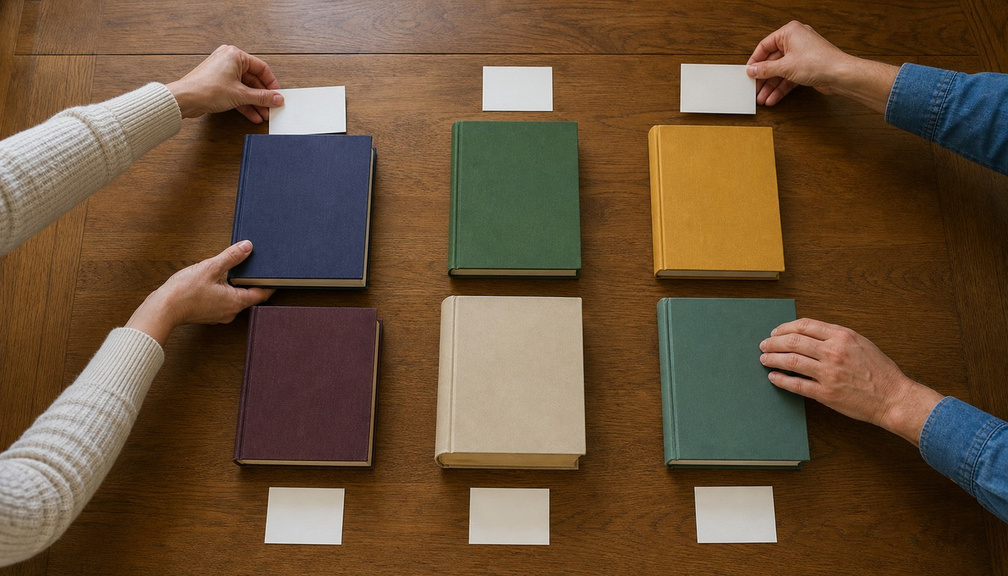
Organise a home library around the clue people actually remember when they reach for a book. Use author order where the name is the usual clue, genre for browsing fiction, subject for exploring non-fiction and a clearly defined sequence where order matters. Give each zone one primary rule and one tie-break, assign every ambiguous book one stable home, and name any oversized or vulnerable-book exception. Test the rules on one mixed shelf before shifting the whole collection.
The shelf rules that matter
Build each shelf zone around the clue household readers usually remember.
Give every zone one primary rule, one tie-break and one stable decision for ambiguous books.
Alphabetical, genre, subject, chronological and size-based arrangements solve different problems.
Treat oversized or vulnerable books as named physical exceptions rather than unexplained gaps.
Test easy cases, boundary books, a series and an awkward format before moving everything.
What do people in your household remember when looking for a book?
The clue people remember first should determine the local shelf rule. Ask every regular reader in the household to recall a few recent searches, then note the first useful detail in each one: an author or title, a fictional genre or mood, a non-fiction subject, a sequence, or the book's physical format. Use actual searches rather than asking which organising style looks most attractive, because a visually tidy shelf can still hide a familiar book.
Separate searches for a known item from exploratory browsing. Someone looking for a particular novelist needs a predictable route to that name; someone wanting a crime novel or material about indigenous gardening is choosing among nearby possibilities. Professional bibliographic work likewise separates creator names, subjects, classification and shelf location rather than treating them as one access route. That distinction is useful evidence for the design, although this household audit is an editorial exercise, not a validated speed test.
Author or title remembered first: consider an alphabetical run.
Kind of story or reading mood remembered first: consider a fiction genre zone.
Question, activity or field remembered first: consider a non-fiction subject zone.
Series, publication path or historical sequence remembered first: define the chronology precisely.
Dimensions or construction remembered first: use format only where fit or support controls placement.
Look for repeated clues within parts of the collection, not one winner for the entire home. Fiction in the lounge may be browsed by genre, while reference books in a study are sought by subject and one household member's favourite authors are easiest to find alphabetically. Record the recurring clue for each zone, then decide where a book will physically live. Several clues can describe it, but only one location can be its normal return point.
Which shelf system suits each way of finding books?
The best local system is the one that answers the retrieval task in that zone without demanding unnecessary interpretation. Alphabetise by author when readers usually know the name; declare how you will treat edited works, several authors, pseudonyms and series. Genre zones suit fiction browsing, while broad subject zones suit non-fiction questions. Use labels such as history, cooking or nature only when the household understands them in the same practical way.
Classification boundaries are choices, not natural laws. OCLC explains that one subject can appear in more than one Dewey discipline according to the aspect being treated. A book about the social history of food could therefore prompt more than one reasonable expectation at home. Choose its location according to the way your household most often uses it, keep that decision stable, and add a cross-reference only if people repeatedly search in the alternate zone.
Chronological order works only when you name the sequence. Series reading order, original publication date, story chronology, an author's publication history and the historical period covered are different arrangements. Size-based order answers another problem: shelf fit and physical support. A hybrid is sensible when zones genuinely serve different habits, but it should remain several simple local rules rather than one elaborate hierarchy that nobody can explain while reshelving.
A useful home-library system does not eliminate ambiguity; it gives ambiguity one predictable place to land.
Choose a shelf system by the task it needs to perform
System
Best retrieval task
Main weakness
Useful tie-break
Alphabetical by author
Finding a known author or keeping one author's books together
Related subjects are scattered, and shared authorship needs a convention
Use series order when sequence matters; otherwise sort by title
Genre
Browsing fiction by mood, convention or kind of story
Genres overlap and household readers may label them differently
Choose one genre home, then alphabetise by author
Subject
Finding non-fiction about a question, activity or field
Cross-subject books fit several plausible zones
Use the book's dominant household use, then author or title
Chronological
Following a series, publication path or meaningful historical run
Different dates answer different questions
State the sequence explicitly and keep it local
Size-based
Accommodating shelf height, support, weight or a format-led collection
Size reveals little about content or author
Treat it as a named physical exception where possible
Hybrid
Managing zones that are searched or browsed in genuinely different ways
Too many rules make placement hard to remember
Give every zone one primary rule and one tie-break
How formal should the system become as the collection grows or is shared?
Add structure only when an observable retrieval problem calls for it. If everyone can scan the collection and remembers where most books live, broad zones or one alphabetical run may be enough. There is no useful universal book-count threshold in the supplied evidence. When boundaries keep shifting, books return to different places or physical exceptions are forgotten, stabilise the zone names and tie-breaks before creating narrower categories or a detailed catalogue.
A shared system must use vocabulary and conventions that regular users can apply. Agree on what everyday zone names mean, whether surnames containing particles are filed together, how series sit within an author's run, and what happens when someone is unsure. A shallow basket or temporary return shelf can hold uncertain books until they are reshelved; it is an optional workflow, not proof that anyone has been careless.
Zone name
Retrieval clue
Primary rule
Tie-break
Home for ambiguous books
Physical exception
Return location
Use that seven-part note as a copy-ready rule for each zone. For example: “South African history; remembered by subject; group by period; then author surname; social-history boundary books stay here; oversized volumes go on the low shelf; uncertain returns go in the tray.” A lightweight record becomes useful when books are spread across rooms, loans are forgotten or exception areas are hard to remember. It need only record room, bookcase, zone or loan status; cataloguing every detail remains optional.
When should a book's size or condition override the shelf rule?
Physical needs should override the retrieval rule when a volume cannot be properly supported in the main run. U.S. National Archives guidance supports storing small to medium sound books upright, with neighbouring volumes of roughly similar size or a bookend providing support. Leave enough room to remove a book without forcing it. This may create a modest size subdivision even when author, genre or subject remains the intellectual rule.
Large, heavy, fragile, distorted or otherwise unsupported volumes may need to lie flat or occupy shelving that supports the whole book. Keep flat stacks limited, never bridge a horizontal volume across the tops of an upright run, and do not allow books to project beyond shelf edges. These are qualified orientation and support principles, not a universal dimension cutoff or a reason to store every book horizontally.
Call the alternate location something obvious, such as “oversized books — lower shelf”, and add it to the zone rule only when people are likely to forget it. A named exception preserves the collection's main logic: someone searching the art section can see that the tall exhibition catalogue has not vanished, while the volume receives the support its format requires. Keep this exception area limited to physical needs rather than turning size into an unexplained second classification system.
How can you test the rules before reorganising every book?
Test one representative shelf before moving the full collection. Include straightforward books, at least one cross-genre or cross-subject title, a short series and an awkward or oversized format. Write the proposed zone rule first, including the retrieval clue, primary rule, tie-break, ambiguity decision, physical exception and return point. The sample should contain enough variety to expose unclear decisions, not merely the books that are easiest to place.
Ask each regular user to place the sample books using the written rule.
Prompt a few searches with clues drawn from recent real attempts to find books.
Have each person return the books without watching someone else's choices.
Note every disagreement about vocabulary, boundaries, sequence or exceptions.
Revise the rule, then repeat the placement and return exercise.
Treat a different placement as information about the rule, not as carelessness. If one person files an anthology under its editor and another under its title, declare the convention. If a boundary book moves between gardening and ecology, decide which use controls its home. If nobody remembers that an atlas sits elsewhere, make the physical exception more visible or add a location note. Revise only the failures that appear rather than adding categories in anticipation of every possible dispute.
Move the remaining books only when household readers can explain and apply the sample rules. A stable physical sequence matters even when several clues lead towards it; Library of Congress training similarly describes a shelflist as records arranged in the same order as corresponding shelf materials. The representative-shelf exercise is still a practical check, not proof of lasting performance. As new books arrive or searching habits change, revisit repeated failures and leave rules that continue to work alone.
Home-library organisation questions
What is the best way to organise a home library?
There is no universally best arrangement. Choose each zone's rule from the clue your household regularly remembers: author or title for known-item searches, genre or subject for browsing, a defined sequence where chronology matters, and a named exception where physical support controls placement.
Should books be organised by genre or author?
Use author order when readers usually seek a known writer and genre zones when they browse for a kind of fiction. A practical hybrid is genre followed by author, provided every cross-genre book receives one stable home.
How should non-fiction books be organised at home?
Use broad, household-facing subject zones when readers begin with a question, field, place or activity. Choose one predictable inner sort, such as author or title, and place cross-subject books according to their dominant use in your household.
Where should oversized books go in a home library?
A large or otherwise unsupported volume may need a low shelf, flat storage or another location that supports its whole surface. Keep flat stacks limited, name the exception area and add a location note only when people repeatedly forget it.
Do I need to catalogue my home library?
A catalogue is optional. A lightweight location record is most useful when books are distributed across rooms, loans or physical exceptions are repeatedly forgotten, or users can no longer remember where zones live.
References & Sources
This article was researched using the following sources:
We write the reading guides we wanted and could not find. Our recommendations lean on reputable sources and bibliographic records, and we say plainly when something is a matter of taste. AI assists with research and drafting, and every guide is checked against its sources before it goes out.
A practical way to separate what you loved about a book, rank the qualities that matter now and turn them into a precise read-alike request for your next read.