How to Organise a Home Library for the Way You Find Books
Organise a home library around the clues your household remembers, with simple shelf rules, stable exceptions and a practical test before the full move.
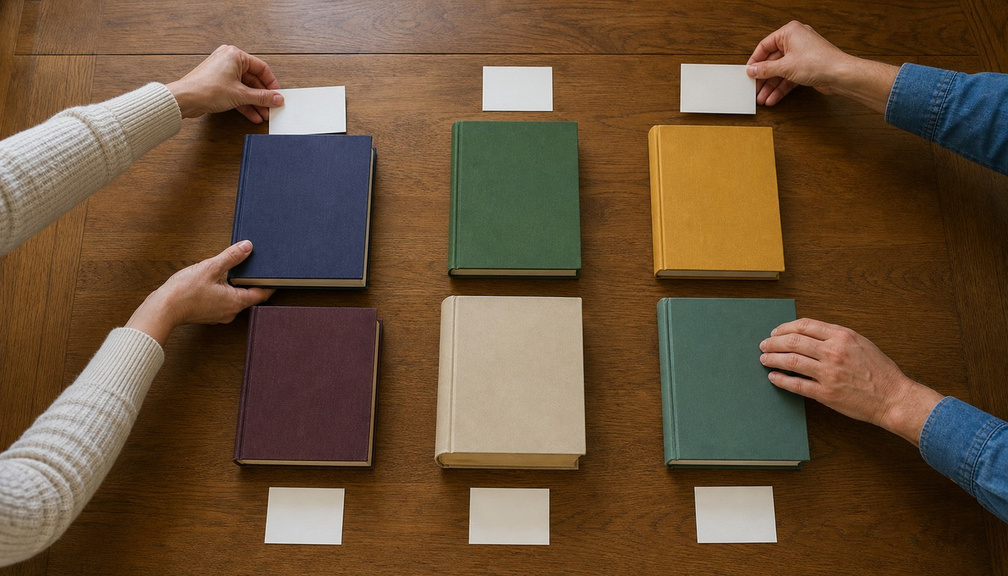
Organise each part of your home library around the clue people actually remember when they look for a book. Use author order where a name is the usual clue, genre where readers browse for a kind of story, subject where they begin with a question, and chronology only where a defined sequence matters. Give every zone one primary rule and one tie-break, choose one stable home for ambiguous books, and name any location where size or condition overrides that rule. Test the arrangement on one representative shelf before shifting the lot.
The shelf rules that matter
Organise each shelf zone around the clue household readers usually remember.
Give every zone one primary rule, one tie-break and one stable decision for ambiguous books.
Alphabetical, genre, subject, chronological, size-based and hybrid arrangements solve different problems; none is universally best.
Treat oversized or vulnerable books as named physical exceptions rather than unexplained breaks in the system.
Test easy cases, boundary cases, a series and an awkward format before moving the full collection.
What does your household remember when looking for a book?
The right starting point is a short audit of recent, real searches by everyone who regularly uses the shelves. Ask each person to recall several books they sought and name the first useful clue they had: an author or title, a fictional genre or mood, a nonfiction subject, a sequence, or a physical format. Record the clue before discussing where the book currently lives. This keeps the exercise focused on retrieval rather than on which arrangement looks tidiest.
Separate searches for a known item from exploratory browsing. Someone seeking a particular Patricia Grace novel already has a name and needs a predictable route to it; someone wanting a short story collection or a book about local gardening is choosing among nearby possibilities. Professional bibliographic work likewise treats names, subjects, classification and shelf location as distinct functions. That distinction is useful inspiration, although it does not make this household audit a validated performance test.
Known author or title: consider an alphabetical route.
Kind of story, genre or mood: consider a fiction browsing zone.
Question, activity or field: consider a nonfiction subject zone.
Series, era or another defined sequence: consider a chronological run.
Large, fragile or distinctive format: check whether physical support must control placement.
Look for patterns within zones, not one winner for the whole bookcase. Fiction may be found by author while cookbooks are found by subject and a manga series by reading order. Choose the recurring clue as the primary rule for that zone, then specify one tie-break for collisions. Every book still needs one physical home. If two readers remember an ambiguous title differently, make a provisional decision and let later searches show whether that home should change.
Which shelf system suits each retrieval task?
The best shelf system is the one that matches the task performed in that particular zone. Alphabetical order serves a remembered author; genre and subject zones serve browsing; chronological order serves a named sequence; size-based order handles fit or support; and a hybrid lets different zones answer different needs. None is inherently correct. The useful question is whether household readers can predict both where a book belongs and what to do when the primary rule leaves a choice.
Choose a system by retrieval task, then declare the tie-break
System
Best retrieval task
Main weakness
Useful tie-break
Alphabetical by author
Finding a known author or keeping an author's books together
Separates related subjects and needs conventions for editors, pseudonyms and joint authors
Use title, or keep a series in reading order when sequence is the remembered clue
Genre
Browsing fiction by mood, convention or kind of story
Genres overlap and household readers may use different labels
Choose one familiar genre home, then alphabetise by author
Subject
Browsing nonfiction by question, field, activity, place or period
One work may cover several subjects and narrow categories can become unstable
Use its main household purpose, then sort by author or title
Chronological
Following a series, publication history, story chronology or historical run
Different dates answer different questions
Name the exact sequence and keep it local to that zone
Size-based
Accommodating shelf height, weight, support or a format-led collection
Size reveals little about content and separates related works
Treat size as a named physical exception and note the location if needed
Hybrid
Managing zones that are genuinely retrieved in different ways
Too many local rules become hard to remember
Give each zone one primary rule and one tie-break
Alphabetical order needs declared edge-case conventions. Decide whether an edited collection sits under the editor, title or a chosen series; how you treat multiple authors and pseudonyms; and whether a series stays in reading order within an author's run. Genre and subject zones need equally plain household vocabulary. OCLC recommends topic organisation as a browsing principle in school libraries, while its Dewey introduction notes that the same subject can appear in more than one discipline depending on the aspect being treated.
That ambiguity is normal, not a flaw to be solved with ever finer categories. Put a book about architecture and social history where your household is most likely to seek it, and retain that decision until repeated searches point elsewhere. A coherent hybrid might use fiction by genre then author, nonfiction by broad subject then author, series by reading order within an author run, and oversized volumes in one named exception area. These are household choices, not a simplified claim that professional libraries all work alike.
A useful home-library system does not eliminate ambiguity; it gives ambiguity one predictable place to land.
How formal should a growing or shared library become?
Add structure only when an observable retrieval problem calls for it. If household readers can scan the collection and remember where most books live, broad zones or a single alphabetical run may be enough. There is no useful universal book-count threshold. Formalise the system when boundaries keep shifting, ambiguous books return to different places, or people cannot explain the current rule. Stabilise names and tie-breaks before creating more categories, because extra subdivisions do not repair an unclear decision.
A shared library works better when regular users agree on ordinary language and predictable conventions. Settle which surnames control alphabetical order, how series are arranged, what each broad zone is called, and what happens when someone is unsure. Labels are useful where a boundary is otherwise difficult to see, but they are not compulsory decoration. A shallow tray or temporary return shelf can hold uncertain returns until someone reshelves them; it is an optional workflow, not a judgement about carelessness.
Zone name: the everyday term everyone will recognise.
Retrieval clue: what readers usually remember first.
Primary rule: the main grouping or order.
Tie-break: the one secondary rule used inside that grouping.
Ambiguous-book decision: the chosen home for boundary cases.
Physical exception: the named place for books that cannot follow the main order.
Return location: the shelf, tray or basket used when placement is uncertain.
Keep records optional and proportionate. When books are spread between the lounge, study and bedrooms, or when loans and physical exceptions are repeatedly forgotten, a lightweight note can record room, bookcase and zone. It need not reproduce professional cataloguing or describe every edition. Start with only the location information that solves an actual memory problem. If everyone can still find and return the books, maintaining a catalogue may create more work than value.
When should size or condition override the shelf rule?
Size or condition should override the retrieval rule when the intended position would leave a volume poorly supported or difficult to remove safely. U.S. National Archives guidance recommends storing small to medium books in sound condition upright, supported by neighbouring volumes of roughly similar size or by a bookend. Leave enough space to take a book out without forcing it. This can justify a small local size subdivision without turning the entire collection into a height-based display.
Keep ordinary sound volumes upright and supported.
Do not pack a run so tightly that removing a book requires force.
Support large or otherwise vulnerable volumes across their full surface when horizontal storage is appropriate.
Keep flat stacks limited and do not bridge a horizontal book across upright volumes.
Keep every volume within the shelf edge rather than allowing it to project.
Large, heavy, fragile, distorted or otherwise unsupported books may need flat storage or shelving that supports the whole volume, depending on construction and condition. There is no universal dimension at which every book should change orientation, and flat storage is not right for every volume. Call the area something memorable, such as “oversized books”, and add a location note only if people repeatedly look for those books in their subject or author zones.
How can you test the system before moving every book?
Test one representative shelf before reorganising the full collection. Include obvious placements, at least one cross-genre or cross-subject book, a short series and an awkward or oversized format. Write the proposed zone rule first, including its name, retrieval clue, primary order, tie-break, ambiguity decision, physical exception and return point. The exercise should reveal whether people understand the rule; it should not be treated as a timed trial or proof of long-term success.
Ask each regular user to place the sample books without coaching.
Use clues taken from recent real searches to find selected books.
Return the books using only the written zone rule.
Record disagreements about vocabulary, boundaries or tie-breaks.
Revise the rule and repeat before expanding it to the full collection.
When two people choose different locations, inspect the rule before blaming the person. Perhaps a zone name means different things to them, the tie-break is missing, or the boundary book genuinely serves two common purposes. Select one home and make that decision visible in the rule. A physical shelf ultimately has one sequence even when readers approach it through several clues; Library of Congress training makes the narrower parallel point that a shelflist follows the order of the corresponding materials.
Move the remaining books only when household readers can explain and apply the sample rules. Keep the final design as small as it can be: broad zones where browsing is enough, precise sequences where order matters, and named exceptions where physical support intervenes. Collections and habits change, so revise rules in response to failures that actually recur. A system that is easy to retrieve from, return to and explain is more useful than one built to resemble a perfectly styled shelf.
Home-library organisation questions
What is the best way to organise a home library?
There is no universally best arrangement. Choose each zone's rule from the clue your household usually remembers: author or title for known books, genre or subject for browsing, a defined sequence where order matters, and format where physical support controls placement. Give the zone one tie-break and test it on representative books.
Should books be organised by genre or author?
Use author order when readers usually seek a known writer, and genre zones when they browse for a kind of fiction. A practical conditional hybrid is genre first and author within each genre. Choose one stable genre home for books that cross boundaries.
How should nonfiction books be organised at home?
Broad, household-facing subject zones suit readers who begin with a question, activity or field. Use one predictable inner order, such as author or title, and avoid categories so narrow that their boundaries keep moving. Give every cross-subject work one chosen physical home.
Where should oversized books go in a home library?
Large or otherwise unsupported volumes may need a named exception area where the whole book is supported, sometimes lying flat. Keep flat stacks limited, do not rest horizontal books across upright runs, and keep volumes within shelf edges. Add a location note only when household readers repeatedly forget the exception.
Do I need to catalogue my home library?
A catalogue is optional. A lightweight location record becomes more useful when books are spread across rooms, loans are hard to track, or physical exceptions are repeatedly forgotten. If household readers can already find and return books reliably, broad shelf rules may be all the record you need.
References & Sources
This article was researched using the following sources:
We write the reading guides we wanted and could not find. Our recommendations lean on reputable sources and bibliographic records, and we say plainly when something is a matter of taste. AI assists with research and drafting, and every guide is checked against its sources before it goes out.