When you open a comic, begin with five simple moves. First, check whether the edition tells you to read left to right or right to left. Next, scan the borders, rows, columns and larger panels without interpreting them yet. Follow each balloon towards its likely speaker, connect one visible state to the next using only the evidence on the page, and then glance back over the complete composition. This route-first pass keeps an unfamiliar page manageable: you can understand the main action before studying every background detail, and you are always allowed to pause or revise your first reading.
The quick reading method
Check the edition’s intended direction before treating any page path as the default.
Infer the smallest bridge supported by adjacent panels instead of assigning every gutter one meaning.
Read balloons, captions, sound effects and images together, then test each convention against the scene.
Scale, density, repetition, silence, framing and content shape pace together, without supplying fixed durations.
Looking back and scanning the complete page are normal parts of reading comics.
Where should your eyes go first?
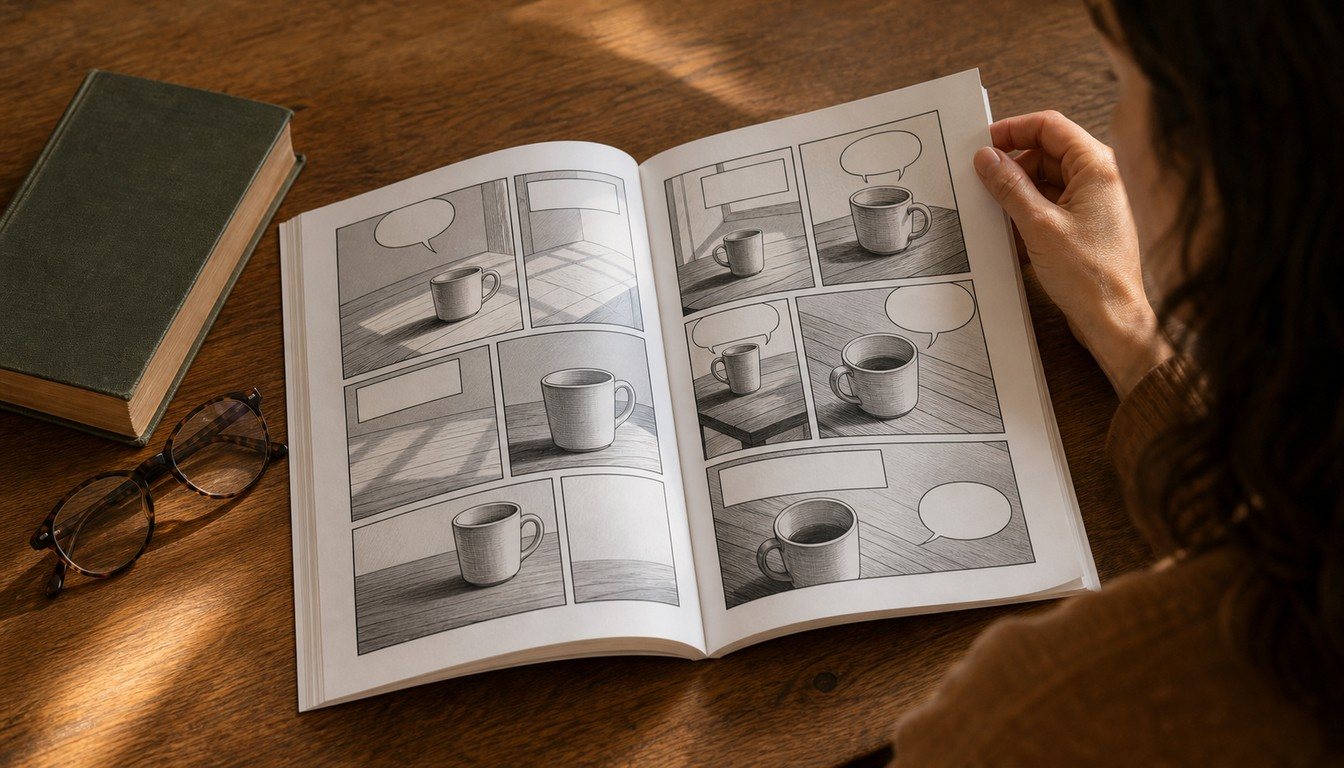
Start with the edition’s stated direction, then let the page’s groupings show you the route. Many English-language editions begin at the upper left and move across an upper grouping before dropping down, while manga editions commonly retain a right-to-left direction. Treat either path as a working convention, not an exam rule. Before reading closely, notice where borders align, where a row or column breaks, whether one image dominates and whether panels overlap or sit inside another image. Clear spatial relationships and the edition’s instructions take priority over habit.
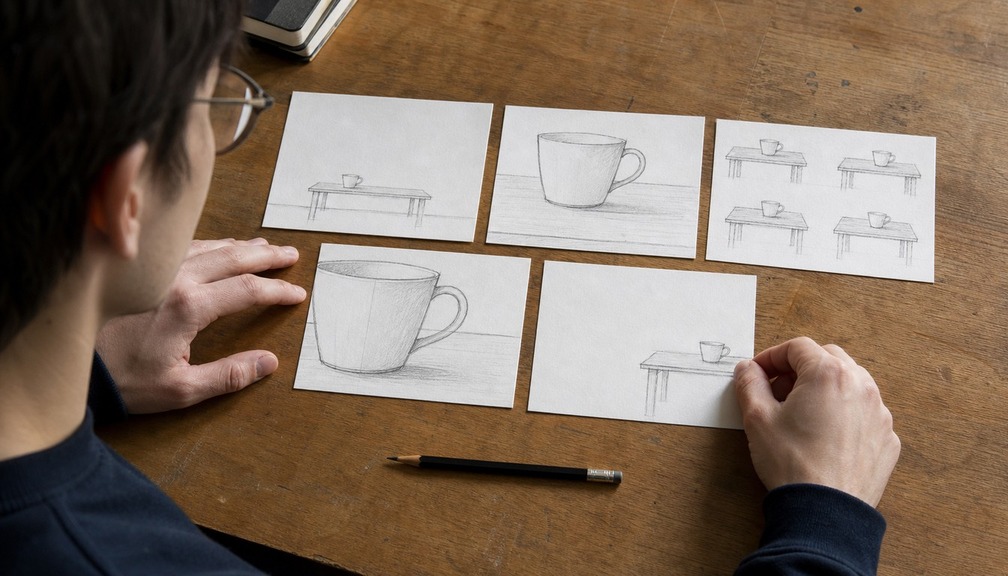
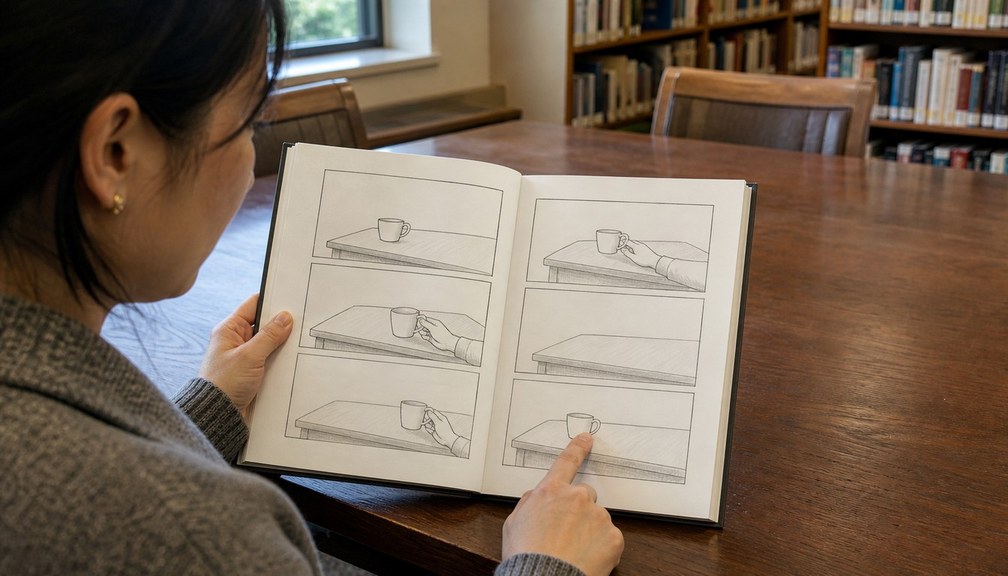
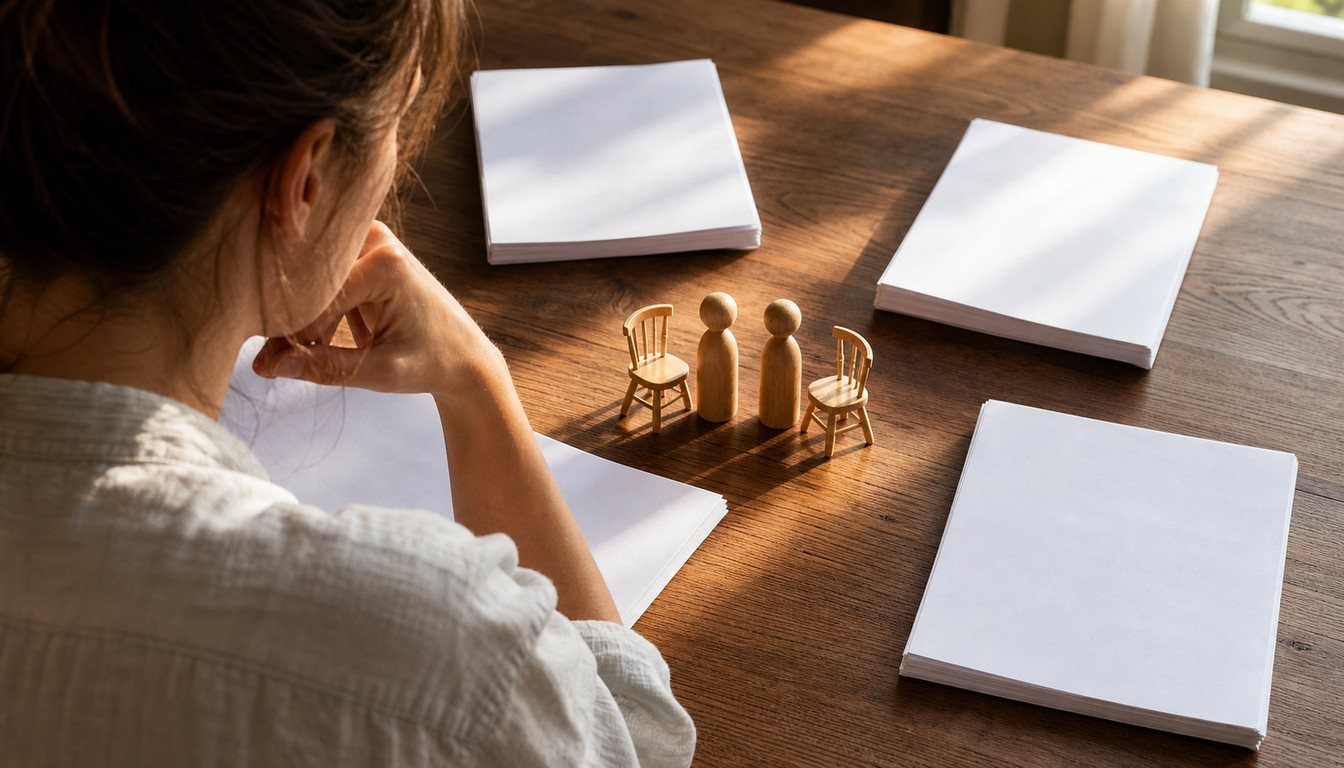
Try the route with four imagined panels: two people sit at a table beside a cup; an arm reaches past it; the cup appears on the floor with liquid spreading; someone reaches for a towel. Establish that order before deciding what caused the spill. Balloon height, tails and conversational sense can settle a genuinely uncertain branch, but they should agree with the broader layout. A 2025 eye-tracking study of 90 people found that a Z-shaped left-to-right route described the group pattern on one textless page, yet individual paths varied and returns to earlier panels were common. That makes the route a prototype, not a universal law.
What happens between one panel and the next?
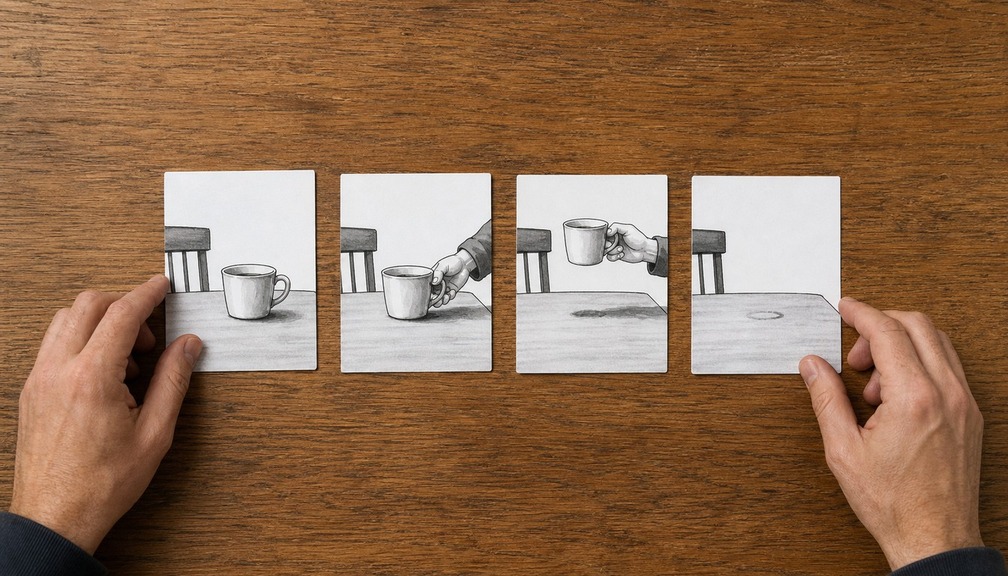
Between panels, infer only the change needed to connect the visible evidence. Each panel is a selective window of attention: it may establish a room, isolate a person, highlight an object, show an action or present a reaction. Read these functions as flexible relationships rather than assuming that every frame captures one objective instant. A sequence might move from setup to action and outcome, but it may skip a step, repeat a reaction or spread one event across several images. The useful question is simply: what changed, and which details show that change?
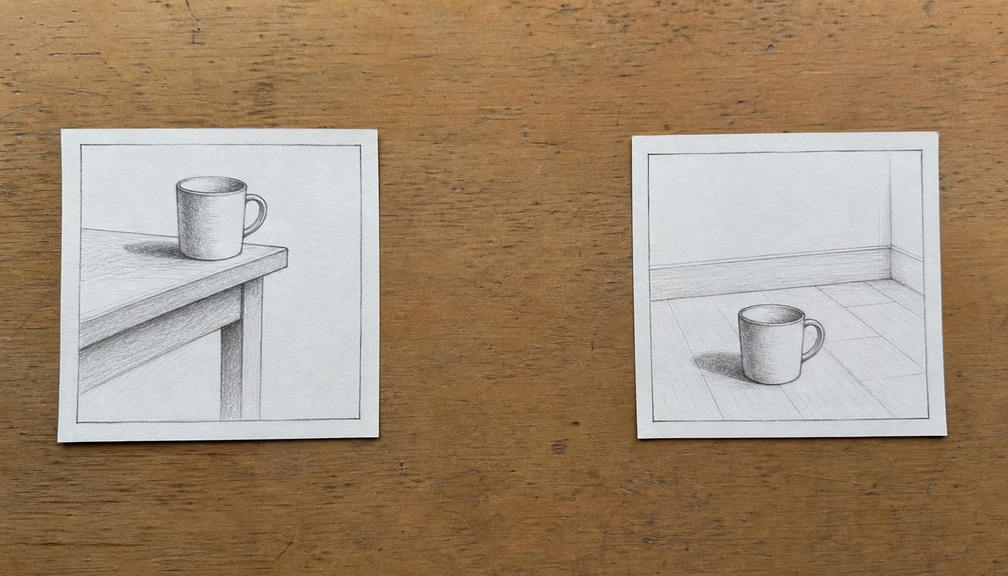
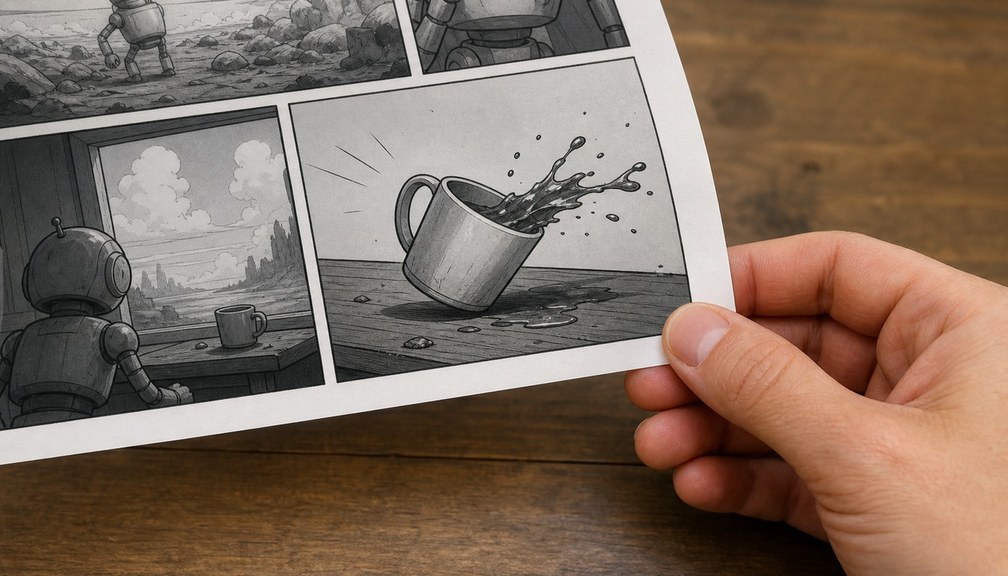
In the cup sequence, one panel places the cup near the table edge and a later one shows it on the floor amid spreading liquid. The smallest supported bridge is that the cup fell or was knocked down. It is not yet safe to name a culprit, intention or precise movement unless another panel or the surrounding story supplies that information. The gutter is the visible space between panels, but it carries no fixed duration by itself. Adjacent images may indicate movement, elapsed time, a changed viewpoint or a new place, and some related panels may have little visible gap at all.
Read for clarity first; let the page teach you its grammar.
How do balloons, captions and sound effects guide the reading?
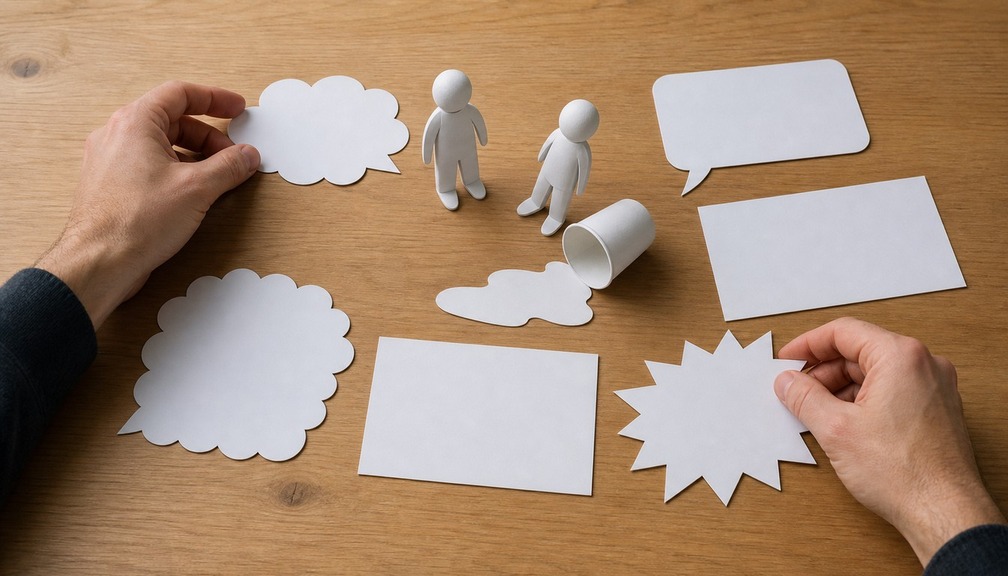
Balloons, captions and sound effects guide you by linking language or sound to a source, audience or part of the scene. Begin with the text-bearing shape or free-standing letters, trace any tail or trail and check where it points. Then test that reading against faces, gestures, turn-taking and the page’s direction. In the table scene, a tail towards one seated figure suggests spoken dialogue; a caption may address the reader or frame the moment; lettering without an on-panel source may indicate a voice beyond the frame; and an impact sound can occupy the same visual space as the fallen cup.
Do not decode a shape in isolation. Rounded balloons, cloudlike thought forms, rectangular captions, jagged borders, heavy letters and unusually small type have common associations, but creators and publishing traditions can modify them. Size, weight, border and placement may suggest emphasis, loudness, whispering, distress, transmission or the character of a sound, yet the scene must confirm the suggestion. Words and pictures are interacting channels: an expression may undermine confident dialogue, a caption may disclose information the image withholds, or a sound effect may direct attention to an event outside the frame.
Use these lettering cues as starting points, then confirm them against the page.
Text form
Visible cue
Likely function
What context must confirm
Speech
A text container with a tail towards a figure
Words spoken within the scene
The tail, mouth, gesture and conversational turn identify the speaker
Thought
A private-looking form or trail towards a figure
Unspoken language associated with that character
The work consistently distinguishes private thought from public speech
Narration or internal caption
A caption without a conventional speaker tail
Reader-facing narration, time, place or internal language
Voice, tense and scene information clarify who addresses whom
Off-panel or transmitted voice
A tailed, bordered or otherwise marked form whose source is unseen
Speech from beyond the frame or through a device
Characters’ reactions and the established lettering vocabulary locate the source
Sound effect
Free-standing or strongly styled lettering within the picture
An environmental, mechanical or impact sound
Position, scale and the depicted action connect the letters to the sound
How does the page control emphasis and felt pace?
The page controls emphasis by selecting what each frame shows and arranging routes for your attention. A wide view of the table establishes the people, objects and room; a closer view makes the cup near the edge newly important; a tight view of spreading liquid holds attention on the result. Within each image, follow gazes, pointing hands, body angles and repeated shapes. Check what sits in the foreground, what remains in the background and where lettering interrupts or continues a visual line. These relationships can guide the eye within one panel and create echoes across several panels.
Felt pace emerges from several cues working together: panel count, changes in framing, repetition, silence, scale, visual density, language and the action itself. Repeating the spreading liquid may prolong attention, while a dense cluster of reactions may feel different from one nearly empty image, but neither choice equals a measurable number of seconds. Likewise, a large panel is not automatically longer than a small one. Bleeds, insets, overlaps, irregular gaps and dominant images are compositional relationships to interpret in context; a 60-comic corpus confirms that published page arrangements vary systematically across selected traditions.
What makes a page turn feel like a reveal?
A printed page turn creates a reveal when it withholds an answering image beyond the page edge. The last visible panel might establish a question, an approaching event or a character’s reaction, while the next page remains physically concealed. In the practice sequence, one page could end with the cup beginning to tip; only after the turn would the fallen cup, spreading liquid and the characters’ responses become visible. The reader’s movement completes the delay. This arrangement enables suspense or surprise, but it does not dictate one emotional response or require you to calculate precisely how long to pause.
The same logic changes with the format because different formats conceal and reveal information differently. A two-page spread may expose both facing pages together, making the seam part of one composition rather than a guaranteed barrier. A guided view can reveal one frame at a time; a swipe replaces one screen with another; and a vertical comic can hold an image below the current viewport until you scroll. Instead of asking whether each device imitates paper, ask what information is presently hidden, what cue prepares its arrival and which action brings it into view.
When should you look back at the page?
Look back whenever later information changes the route, speaker or action you first understood, and make one brief second pass after the sequence is clear. On the first pass, prioritise navigation: establish direction, connect language and sound to their likely sources and follow the visible changes. On the second pass through the cup scene, confirm the uncertain speaker, compare the evidence before and after the fall, and notice repeated cup shapes, character gazes, background continuity, silence and shifts in framing. This separates basic comprehension from closer appreciation without turning either pass into a test.
Finish with a whole-page glance. See how individual panels form rows, clusters or competing routes; notice whether a repeated shape links distant moments; and ask whether the final beat prepares a turn, spread, swipe or scroll. Research participants commonly returned to earlier panels, although the evidence does not assign every backward movement the same purpose. A return is therefore compatible with comics reading, not proof that you have failed. Follow clarity first, revise an interpretation when the page gives you better evidence and let the vocabulary of panels, gutters and lettering become intuitive through regular reading.
Frequently asked questions
How do you know which comic panel to read first?
Check the edition’s stated direction, then scan the top-level rows, columns, gaps and dominant panels. Many English-language editions begin at the upper left, while manga editions commonly read from the upper right. When the arrangement is unusual, use clear spatial relationships and dialogue context rather than forcing a perfect standard route.
What are gutters in comics?
Gutters are the visible spaces between panels. Their width or presence does not assign one fixed meaning or duration to the transition. Compare the adjacent images and story context to decide whether they imply movement, elapsed time, a new place, a changed viewpoint or another relationship.
How do you tell which speech balloon comes first?
Begin with the page’s reading direction and compare the balloons’ relative positions. Trace their tails, identify the likely speakers and test the order against turn-taking and conversational sense. A book may bend familiar placement rules, so the complete scene remains the final check.
How do comics tell stories without showing every action?
Panels select key states and allow readers to infer a constrained bridge between them. If one image shows a cup near the table edge and the next shows it on the floor, a fall is supported. Do not invent a culprit or intention unless the pictures or surrounding story provide evidence.
Why do comic page turns create suspense?
A printed page can place a setup at the edge and conceal the answering image until you turn. Your action becomes part of the delay and reveal, though the effect is not guaranteed. Spreads, swipes, guided views and vertical scrolls manage visibility through different boundaries.
References & Sources
This article was researched using the following sources:
We write the reading guides we wanted and could not find. Our recommendations lean on reputable sources and bibliographic records, and we say plainly when something is a matter of taste. AI assists with research and drafting, and every guide is checked against its sources before it goes out.