Choose the point of view that gives your story the most useful combination of voice, information limits, dramatic irony and narrative distance. Pronouns are only the visible surface. The deeper decision is who tells, whose perceptions shape a scene, what the narration may reveal and how closely the prose sits beside immediate experience. Test those elements in one bounded scene before committing an entire short story or novel to a mode that may become awkward after the opening pages.
The decision in brief
Choose point of view for voice, information limits, dramatic irony and distance, not for pronouns alone.
Treat narrator, viewpoint character, knowledge boundary and narrative distance as four separate controls.
First person, close third, omniscient third and second person offer different opportunities and costs; none is universally best.
Add another viewpoint only when its access or contrast justifies reorienting the reader.
Rewrite the same bounded scene under controlled conditions, then choose a provisional winner from the effects you can observe.
What are you really choosing when you select a point of view?
You are choosing a system that controls voice, perception, knowledge and distance. Point of view determines the perspective through which the story is told and whose knowledge the narration can make available. Craft terminology varies, so use a practical four-part model rather than worrying about the perfect label. This is an editorial diagnostic, not a universal taxonomy: its purpose is to expose decisions that a simple choice between “I” and “she” can conceal.
Narrator: identify the story-world position and voice doing the telling, including whether a first-person narrator speaks during events or looks back later.
Viewpoint character: name the person whose perceptions, vocabulary, assumptions and blind spots filter the current scene.
Knowledge boundary: list what the narration may reveal now, what must be inferred and what remains deliberately withheld.
Narrative distance: decide whether the prose sits near sensation and immediate thought or makes room for summary, reflection, context and commentary.
These controls can be adjusted separately. A retrospective first-person narrator may know more than the younger self who lived through an event. A close-third scene can remain with one character while moving nearer to their unspoken reaction or farther out towards context. A story may also use several first-person narrators, so grammatical person does not decide viewpoint count. Write your four choices beside the draft; any blank or contradictory answer points to a useful revision question.
Point of view is not the pronoun on the door; it is the system deciding who speaks, who perceives, what becomes knowable and how close the reader stands.
ShelfKin Editorial Team
How do the main point-of-view modes change the page?
The main modes change whose language dominates, what information arrives naturally and what practical problems the draft must solve. First person, close third, omniscient third and second person are learnable, revisable techniques rather than positions in a ranking. Grammatical person and available knowledge are related but distinct: changing “I waited” to “Meera waited” does not by itself establish how much the narrator knows or how strongly Meera colours the sentence.
First person foregrounds a character narrator's language, memories, conclusions and blind spots. It can support confession, self-justification, reflection or a forceful present-tense account, but none of these effects is automatic. Decide why this person tells the story and when the telling occurs. If the narrator recounts childhood from adulthood, keep the knowledge and vocabulary of the narrating self legible without erasing what the experiencing self understood at the time.
Close third uses third-person grammar while filtering a scene through one character's perceptions and judgements. Other minds remain externally readable unless the draft marks a transition. Omniscient third employs a narrating intelligence able to move beyond one character for context, comparison or dramatic irony; those movements need a discernible pattern, not whichever thought happens to be convenient. Second person establishes a story-world “you” and an address relationship whose speaker, addressee and occasion should become legible.
Second person may create intimacy, direct address, accusation, implication, self-division, estrangement or reader resistance, but no response is guaranteed. Ask what “you” accomplishes that “I” or a named character cannot. Across all four modes, judge the page rather than a general reputation: note the words the mode makes possible, the facts it handles cleanly and the workarounds it repeatedly demands.
A working comparison of four narration modes
Narration mode
Reader access
Useful pressure
Cost to test
First person
The narrator's perceptions, memories, conclusions, language and blind spots
Makes the teller's voice and reason for telling central
Outside information needs inference, testimony, documents or later discovery
Close third
One character's experience in third-person grammar
Keeps a firm character filter while allowing adjustable distance
Other minds must remain external unless a transition is clearly marked
Omniscient third
A narrating intelligence can move beyond any single character
Allows breadth, context, comparison and dramatic irony
Movements need stable narrative logic rather than convenient thought switching
Second person
A narrator addresses or names a story-world “you”
Can create direct address, implication, self-division or estrangement
The speaker-addressee relationship must be legible, and readers may resist it
How close should the prose sit to a character's experience?
The prose should sit as close as the scene's immediate purpose requires, and that distance can change without changing viewpoint mode. Narrative or psychic distance is the felt distance between a reader and events or character experience, not a physical measurement. A wider rendering can hold time, setting, history, summary or commentary. A nearer rendering can lean on bodily sensation, character-specific diction, emotion and thoughts that have not yet been neatly processed.
For broader distance, inspect summary, contextual information, longer time spans and a narrator's reflective language.
For closer distance, inspect sensory detail, immediate stakes, sentence rhythm, character-coloured vocabulary and minimally tagged thought.
Keep grammatical person and viewpoint character unchanged during the test, so distance is the only major variable.
Compare the two versions as alternatives, not as fixed levels through which every scene must travel.
Try the same small moment twice in close third. In the reserved version, describe the room, the action and the character's visible response. In the nearer version, remove unnecessary filter phrases such as “she noticed” where the perception is already clear, and let syntax or word choice carry her judgement. Neither version is inherently stronger. The useful one creates the amount of context, pressure and interpretive room that this moment needs without producing a jarring, accidental shift.
When does another viewpoint earn a place in the story?
Another viewpoint earns its place when it provides indispensable event access, interpretation, contrast or dramatic irony that the existing viewpoint cannot supply efficiently. This is a structural decision separate from grammatical person: a novel may alternate between several first-person narrators or several close-third filters. Each addition should notice, interpret and phrase the world distinctly. If two narrators deliver the same facts in similar language, the handoff costs orientation and momentum without adding enough value.
Name the event, fact or contrast that only the proposed viewpoint can deliver well.
Check whether its vocabulary, assumptions and blind spots differ meaningfully from the existing filter.
Remove repeated coverage unless the changed interpretation itself creates the value.
Use a clear scene or section transition when readers need help reorienting; a chapter break is one option, not a law.
Recasting a scene through a secondary character can uncover different perceptions, feelings, relationships and underdeveloped material. Preserving the external incident while changing the filter also reveals how differently two people interpret the same action. Treat that discovery as revision material, not automatic proof that the second character belongs in the final narration. Sometimes the alternate version simply shows what the original viewpoint should misunderstand, overlook or infer more sharply.
How can you audition viewpoints without changing the underlying story?
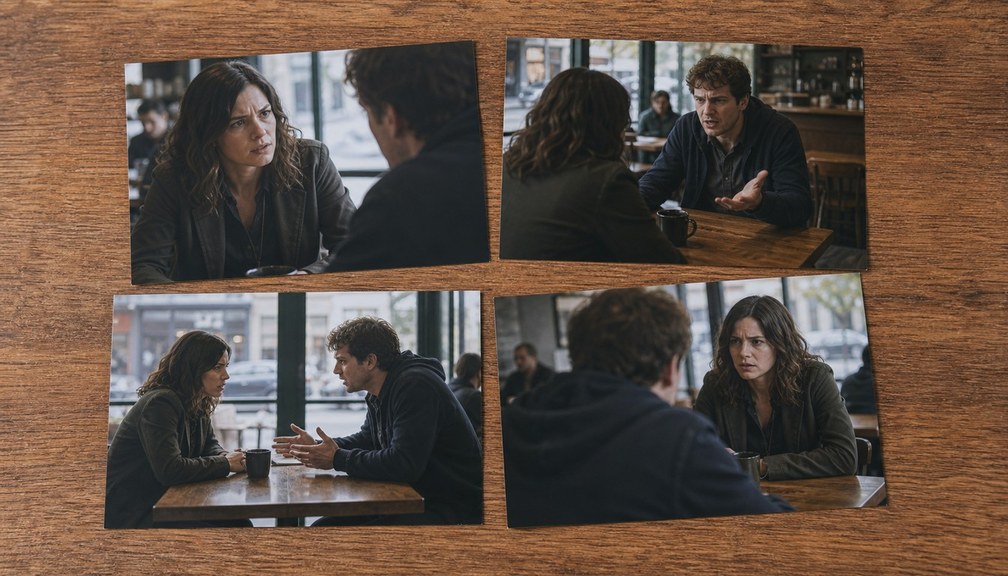
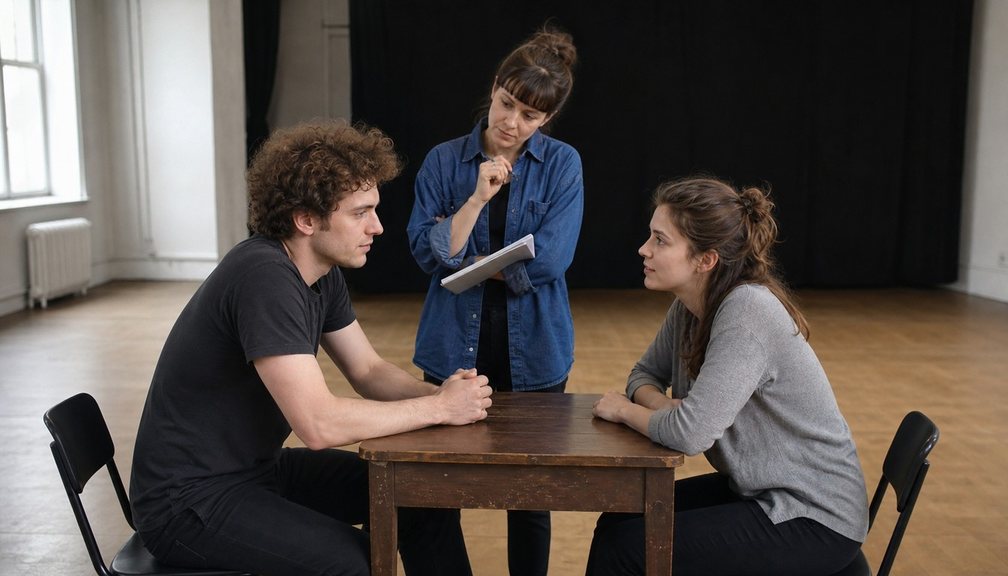
Run a fair audition by rewriting one compact scene while holding its event, setting, conflict, character desires, tense, endpoint and approximate length steady. Choose two characters who want different things, include at least one concrete action and leave one relevant fact unspoken. MIT OpenCourseWare uses a related exercise with first person, third person and another character's viewpoint, limiting each version to 200 words. The sequence below is an expanded editorial adaptation using about 250 words per version.
Write first person from character A, deciding whether the narrator experiences the scene now or recounts it later.
Write close third from character A at a moderately observant distance.
Rewrite that close-third version nearer to sensation, immediate thought and character-coloured diction.
Write omniscient third with a clear narrative reason to move beyond character A.
Write second person after defining who says “you” to whom, even if the occasion remains implicit.
Write first person or close third from character B while preserving the same external incident.
Do not improve the plot halfway through the sequence. Record attractive discoveries in a separate note and reserve them for the next revision; otherwise, a later version may seem stronger simply because it received a better action or revelation. Keep the versions near the same length so extra explanation does not masquerade as a point-of-view advantage. The aim is controlled comparison, not six polished stories or a mechanical experiment with a correct result.
How do you choose a provisional winner from the audition?
Choose the version whose benefits remain useful beyond the audition scene and whose costs the larger story can bear. Read all six versions together and annotate effects rather than awarding points. Controlled rewrites can expose gains, losses and newly available material, but artistic judgement still decides what matters. The following checks are editorial prompts, not a validated scoring instrument, and a version need not win every category to become the strongest provisional choice.
Voice: which version contains language only this narrator or viewpoint character could plausibly use?
Knowledge: which necessary facts become available, and which useful facts remain concealed?
Irony: where does the reader understand more or less than the viewpoint character?
Distance: does the prose create the right balance of immediacy, reflection and context?
Structure: are offstage events, transitions and later revelations manageable without repetitive workarounds?
Viewpoint count: what indispensable access or contrast pays for every proposed handoff?
Select one version provisionally and revise it as a complete scene. Then carry it across enough new pages to expose recurring evasions, muddy transitions or a voice that is exhausting to sustain. Reopen the choice if the knowledge boundary repeatedly blocks essential events, or if another viewpoint offers indispensable access rather than duplicated information. A provisional decision protects drafting momentum while leaving room for evidence from the manuscript to change your mind.
Frequently asked questions about fiction point of view
How do I choose a point of view for a story?
Compare who narrates, whose perceptions filter the scene, what the narration may know and how close the prose feels. Rewrite one bounded scene in your leading modes, then choose the version whose voice, information limits and practical costs best serve the larger story.
Should I write fiction in first person or third person?
Use first person when the character narrator's particular language and act of telling create useful pressure. Use close third when you want one character's filter with third-person grammar and flexible distance. Neither mode is inherently closer, easier or more reliable.
What is the difference between close third and omniscient third person?
Close third filters a scene through one viewpoint character, leaving other minds externally legible. Omniscient third uses a narrating intelligence that can know and move beyond any single character, but those movements need a clear and consistent narrative logic.
Should a novel have one viewpoint or multiple viewpoints?
Add viewpoints only when each provides indispensable event access, interpretation, contrast or dramatic irony. Make the filters distinguishable and ensure that every handoff contributes more than repeated information.
What is narrative distance in fiction?
Narrative distance is the felt distance between the reader and story events or a character's experience. Summary and context can widen it, while sensory detail, immediate thought and character-coloured language can bring the prose nearer.
References & Sources
This article was researched using the following sources:
We write the reading guides we wanted and could not find. Our recommendations lean on reputable sources and bibliographic records, and we say plainly when something is a matter of taste. AI assists with research and drafting, and every guide is checked against its sources before it goes out.