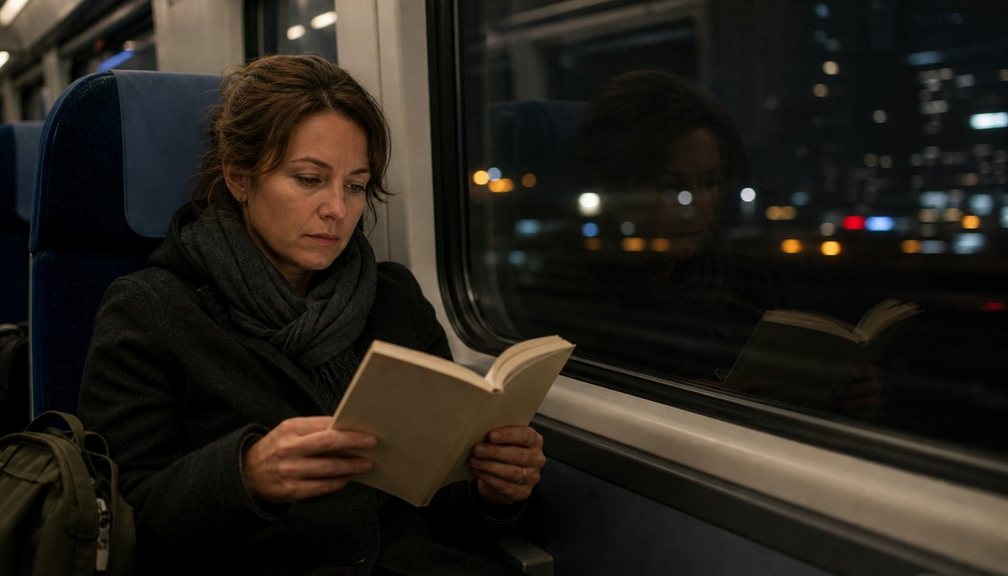
Choose according to the experience you want. Pick a cosy mystery for a lighter social world, a locked-room mystery for an apparently impossible puzzle, a police procedural for official investigative work, or a legal mystery or thriller for lawyers and case strategy. Choose hard-boiled detective fiction for street-level danger and corruption, or psychological suspense for intimate uncertainty and forward peril. These labels overlap across mystery, crime, suspense and thriller traditions, so one disappointing book need not rule out the entire field.
The quickest way to choose
Choose by tone, likely intensity, investigative method and the question pulling you through the story.
Cosy usually signals a lighter social world; locked-room signals an apparently impossible puzzle, not a content rating.
Police procedurals foreground official investigation, while legal stories foreground lawyers, accusation and case strategy.
Hard-boiled fiction puts pressure in the outside world, while psychological suspense turns much of its uncertainty inward.
No label guarantees a particular book's explicitness, so check title-specific information when your boundaries are firm.
How should you choose when mystery labels overlap?
Choose with four signals: emotional tone, likely on-page intensity, who investigates and how, and whether the strongest pull is what happened or what may happen next. This framework is a reader's navigation aid, not an official taxonomy. Mystery and crime-fiction labels overlap, and the same novel may draw on several traditions. A library, publisher and bookseller may even shelve or describe it differently without any of them capturing the whole reading experience.
Look beyond the label because books within one category can differ in pace, action, setting and emphasis on character. Tone and explicitness also need separate consideration: a brooding atmosphere does not automatically mean graphic violence, while a witty voice does not promise that every event will feel gentle. Cosy is the clearest low-explicitness signal among these six routes, but it still is not a guarantee for an individual title. If particular material is a firm boundary, consult that book's description or content notes.
Tone: light, warm or playful at one end; bleak, anxious or disenchanted at the other.
Likely intensity: how much violence, threat or other difficult material may appear on the page, subject to title-level variation.
Method: amateur observation, an impossible-crime puzzle, official police work, legal strategy, street investigation or inward scrutiny.
Driving question: mainly what happened and how, or increasingly what might happen next and whom to trust.
The best mystery label is not a box for the book; it is a compass for the reading experience you want.
Would you rather have social comfort or an apparently impossible puzzle?
Choose a cosy mystery for a generally lighter, socially intimate world; choose a locked-room mystery when the main pleasure is solving an apparently impossible crime. A cosy commonly follows an amateur sleuth whose conversations, observations, community knowledge or everyday expertise reveal what happened. Explicit violence, sex and language are usually restrained, but disturbing events can still occur. The attraction lies as much in relationships and place as in assembling the solution.
A locked-room mystery asks how a crime could have happened when the circumstances seem to make it impossible. The reader watches the story test entrances, timings, physical evidence and assumptions until a coherent method becomes visible. Fair-play versions encourage you to reason within the possibilities the narrative establishes and aim for a solution that surprises without becoming arbitrary. Not every locked-room story follows the same formal rules, however, and a clever puzzle can sit inside a dark or intense novel.
Do not confuse an impossible crime with a merely closed circle of suspects. A remote house, island or snowbound hotel may limit who could be responsible, but that alone does not make the mystery locked-room. The defining attraction is the apparent impossibility of the act and the eventual explanation of how it was achieved. Choose this route when you want to inspect the mechanics of the puzzle; choose cosy when social observation and a more reassuring atmosphere matter more.
Do you want official investigation or a legal contest over the case?
Choose a police procedural when you want investigators, teamwork and organised casework to provide the story's engine; choose a legal mystery or thriller when lawyers, accusation and competing accounts should drive it. A procedural may follow one officer or a co-operating squad through interviews, evidence work and specialist resources. Its tone is often methodical and work-focused, although the balance of process, action, solution and the investigators' private lives differs markedly from book to book.
A legal story shifts pressure towards defence strategy, disputed truth, procedural constraints and questions of justice. It can move between offices, interviews, investigations and courtrooms rather than confining every important development to a trial. Some books invite close attention to how evidence and rival narratives are tested through argument; others place greater weight on suspense or personal jeopardy. That variation is why the wider label may include both legal mysteries and legal thrillers.
Neither institutional label is a dependable intensity rating. A patient procedural can contain graphic material, while a fast legal thriller may keep much of its violence off the page. Nor should either form be treated as practical instruction or a reliable account of procedure in Ireland or elsewhere: fictional institutions are shaped for narrative purposes. Pick between them by deciding whether you want the case built mainly through official investigation or contested through lawyers and legal strategy.
Do you want street-level grit or inward uncertainty?
Choose hard-boiled detective fiction for external pressure, danger and corruption; choose psychological suspense when memory, motive, perception and trust create the sharper uncertainty. The conventional hard-boiled investigator is streetwise and disenchanted, moving through a threatening social world while pursuing some limited measure of justice. Confrontation, endurance and compromised institutions tend to matter more than the protected calm of an intellectual puzzle, although a hard-boiled story can still contain a carefully constructed whodunit.
Hard-boiled is the signal used for this comparison, not an automatic substitute for noir. If a catalogue or reviewer also applies noir to a book, treat that as another clue about the reading experience rather than adding an assumed equivalent to this six-way guide. Hard-boiled conventions themselves are flexible: writers can complicate the familiar investigator, setting and voice. The useful question is whether you want pressure exerted through streets, institutions, danger and direct confrontation.
Psychological suspense turns much of the investigation inward, towards secrecy, fear, motive, memory, perception and uncertainty about whom to trust. Its pull often leans more strongly towards what may happen next, whereas a classic mystery generally looks back to ask what happened. The boundary is not absolute: psychological suspense may resolve a past crime, and a conventional mystery may create immediate peril. No unreliable first-person narrator or particular profession is required, and the label alone still cannot predict graphic content.
Six mystery and crime-fiction entry points compared by typical reading signals
Subgenre and typical tone
Likely on-page intensity
Investigator or method
Driving reader question
Cosy mystery — generally lighter and socially intimate
Usually restrained, but never a title-specific guarantee
Amateur sleuth using observation, conversation and community knowledge
What happened within this familiar social world?
Locked-room mystery — cerebral; tone may vary
Cannot be inferred from the puzzle design
Reasoning through an apparently impossible crime
How could this have happened at all?
Police procedural — often methodical and work-focused
Varies by title despite the procedural emphasis
Police investigators using teamwork and institutional resources
How will the official investigation build the case?
Legal mystery or thriller — contested and strategic
Varies from measured argument to personal peril
Lawyers testing evidence, accounts and case strategy
Which account will withstand the legal contest?
Hard-boiled detective fiction — darker and disenchanted
Often threatening, but not a reliable measure of explicitness
Streetwise investigator confronting danger and corruption
What truth or limited justice can survive this world?
Psychological suspense — intimate, anxious and uncertain
May feel intense without guaranteeing graphic material
Scrutiny of motive, memory, perception, secrecy and trust
Whom can I trust, and what may happen next?
How can you test a subgenre without a big commitment?
Test one route with a standalone novel or a series opener, then record what worked across the four signals rather than issuing a verdict on the whole subgenre. Begin with the experience you most want: social comfort, an impossible puzzle, official method, a legal contest, street-level grit or psychological uncertainty. A single sample is enough to learn something useful, but not enough to represent a category whose tone, pace, action, setting and character focus can vary substantially.
Name the experience you want before choosing a title, including your preferred tone and any firm content boundaries.
Borrow or buy one standalone or series opener so that the experiment does not require a long commitment.
After reading, note the tone, intensity, investigative method and driving question separately.
If the method suited you but the tone did not, try another title under the same broad label.
When labels fail, ask a librarian or knowledgeable bookseller for a combination of signals rather than one perfect category.
Be specific when asking for the next book. You might request a logic-led puzzle with restrained explicitness, an official investigation with stronger character focus, or inward suspense that still supplies a clear solution. This vocabulary travels better than a label because it identifies the feature you actually enjoyed. For a firm boundary around violence or other material, return to title-specific descriptions or content notes; the subgenre can narrow the shelf, but it cannot certify every scene.
Mystery subgenres: common questions
What are the main types of mystery novels?
Six useful entry points are cosy mystery, locked-room mystery, police procedural, legal mystery or thriller, hard-boiled detective fiction and psychological suspense. They are overlapping reader signals, not a complete taxonomy, and some extend into neighbouring crime, suspense and thriller traditions. Choose among them by comparing tone, likely intensity, method and driving question.
What is the difference between a cosy mystery and a police procedural?
A cosy mystery typically has a lighter, socially intimate setting and an amateur sleuth who relies on observation, conversation or community knowledge. A police procedural foregrounds police investigators, official resources, teamwork and organised casework. Neither label guarantees the intensity of an individual book.
Is a locked-room mystery the same as a closed-circle mystery?
Not necessarily. A closed circle limits the suspect group, often through an isolated setting, while a locked-room mystery centres on a crime that appears impossible and demands an explanation of how it occurred. One story can use both designs, but a small suspect list alone does not create an impossible-crime puzzle.
What does hard-boiled mystery mean?
Hard-boiled detective fiction conventionally follows a streetwise, disenchanted investigator through danger, corruption and compromised institutions. The investigator seeks truth or some limited measure of justice under external pressure. Individual books can vary or complicate these conventions, and hard-boiled should not be used as an unexplained substitute for noir.
What is the difference between a locked-room mystery and psychological suspense?
A locked-room mystery concentrates on reasoning through an apparently impossible crime. Psychological suspense places more pressure on motive, memory, perception, secrecy and uncertainty about whom to trust, often strengthening the forward question of what may happen next. The forms can overlap, and neither supplies a dependable content rating.
References & Sources
This article was researched using the following sources:
We write the reading guides we wanted and could not find. Our recommendations lean on reputable sources and bibliographic records, and we say plainly when something is a matter of taste. AI assists with research and drafting, and every guide is checked against its sources before it goes out.