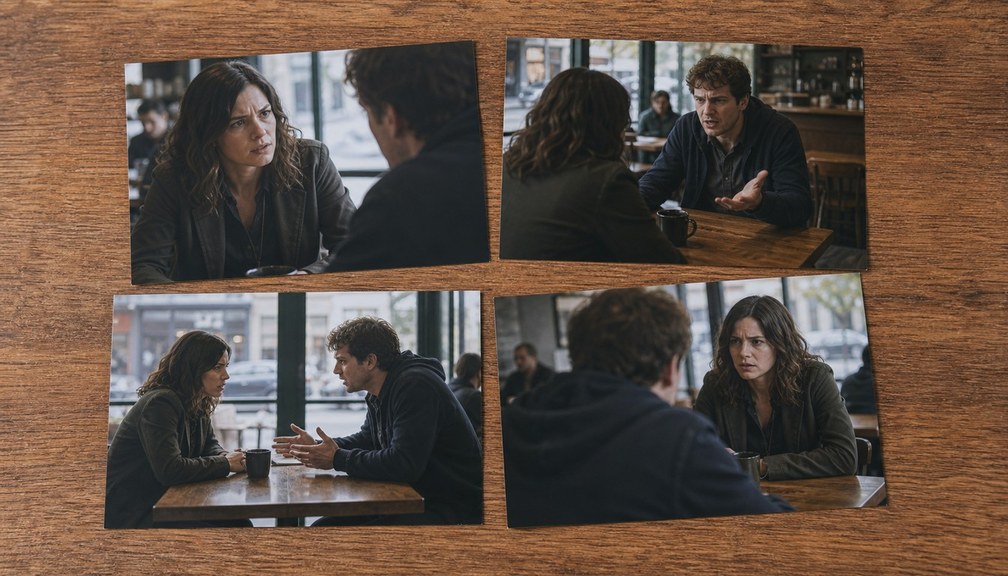
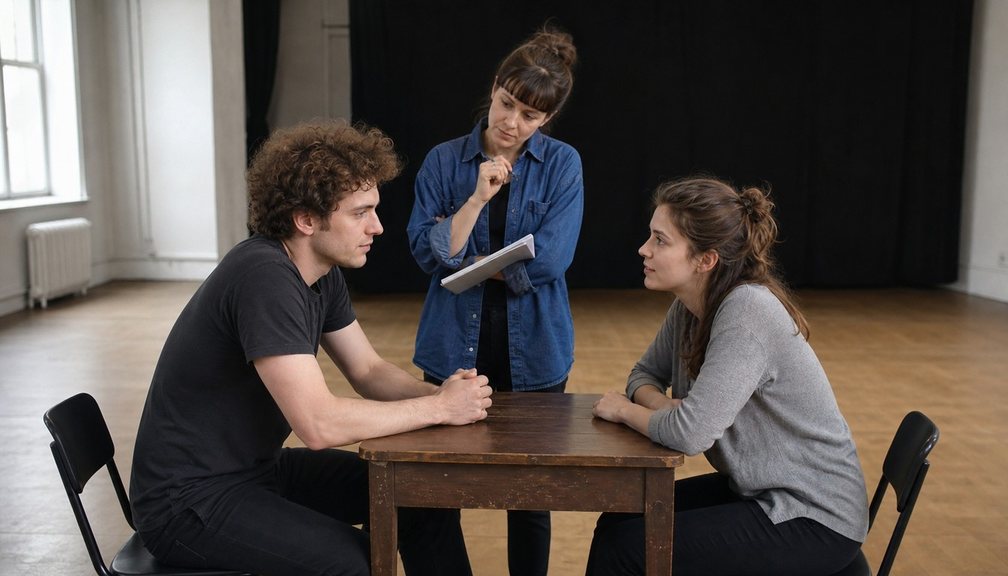
Choose the point of view that gives your story the most useful combination of voice, information limits, dramatic irony and narrative distance. Pronouns are only the visible part of that decision. The same café row, family secret or missed train can feel entirely different when another voice tells it, another character filters it or the prose moves nearer to immediate thought. The soundest choice is therefore provisional: test several versions of one scene, observe what each makes possible and then see whether the strongest option remains workable across the wider draft.
The essential choices
Choose point of view for voice, information limits, dramatic irony and distance, not for pronouns alone.
Treat narrator, viewpoint character, knowledge boundary and narrative distance as four separate controls.
First person, close third, omniscient third and second person offer different opportunities and costs; none is universally best.
Add another viewpoint only when its indispensable access or contrast repays the effort of reorienting the reader.
Rewrite the same bounded scene under controlled conditions, then select a provisional approach from the effects you can observe.
What are you really choosing when you choose a point of view?
You are choosing who tells, whose experience filters the scene, what the narration may disclose and how close the prose sits to experience. Point of view establishes the perspective and voice through which a story is told, including whose knowledge is available to the narration. Grammatical person matters, but an I, she or you does not by itself settle the voice, information boundary or distance. Separating narrator, viewpoint character, knowledge boundary and distance is a practical editorial synthesis for diagnosing a draft without treating pronouns as the complete choice.
Narrator: name the story-world position and voice doing the telling, including whether a first-person teller speaks during the event or looks back on it.
Viewpoint character: identify whose perceptions, vocabulary, assumptions and blind spots shape the current scene.
Knowledge boundary: note what the narration may reveal now, what readers must infer and what the story deliberately withholds.
Narrative distance: decide whether the prose favours immediate sensation and thought or allows more room for summary, reflection, context and commentary.
Write those four answers beside a troublesome scene. If the narrator may describe a conversation held elsewhere, that is a knowledge decision; changing every I to she will not resolve it. If the prose reports that Niamh entered a cold kitchen but never uses the details she would notice, the issue may be viewpoint or distance rather than grammatical person. These controls are drafting questions, not a universal taxonomy, and their value lies in making vague dissatisfaction specific enough to revise.
Point of view is not the pronoun on the door; it is the system deciding who speaks, who perceives, what becomes known and how close the reader stands.
How do the main point-of-view modes change the page?
The main modes change whose language dominates, which information is naturally available and what kind of pressure the telling must sustain. Close third, omniscient narration, first-person direct address and second person are distinct techniques that writers can study, practise and revise. Grammatical person and the narrator's available knowledge are related but separate choices, and craft labels vary. Use the comparison below as a prompt for testing page effects, not as a ranking or a rule about which mode belongs to a particular genre.
Four narration modes compared by access, useful pressure and practical cost
Narration mode
Reader access
Useful pressure
Cost to test
First person
The character narrator's perceptions, memories, conclusions, language and blind spots.
Makes the teller's voice and reasons for telling difficult to ignore; a retrospective teller can contrast present understanding with an earlier self.
Events beyond the narrator's access require inference, testimony or later discovery, while the timing of retrospective knowledge needs control.
Close third
One character's experience in third-person grammar, often coloured by that character's diction and judgements.
Keeps a firm character filter while allowing the prose to move between context and near sensation or thought.
Other minds remain externally legible unless a transition is marked, and repetitive filter phrases can push the prose farther away.
Omniscient third
A narrating intelligence may move beyond one character across minds, places, periods, context and commentary.
Creates breadth, comparison, dramatic irony, group patterns and a shaping narratorial voice.
Movements require discernible logic and a stable intelligence; convenient access to whichever thought is needed can feel accidental.
Second person
A narrator addresses or names a story-world you, creating a relationship among speaker, addressee and reader.
Can produce direct address, implication, accusation, self-division, intimacy or estrangement.
The identity of you and the occasion of address must become legible, while some readers may resist assigned actions or identities.
First person is not automatically intimate, and third person is not automatically neutral or distant. A reflective first-person narrator may summarise decades from a composed remove, while close third can sit against a character's skin. Second person can establish participant or direct-address relationships and may create implication, self-division, estrangement or resistance, but no response is guaranteed. Omniscience likewise needs design: its freedom comes from a narrating intelligence with a reason to compare, contextualise or move, not from slipping into any available mind whenever information is convenient.
How close should the prose sit to a character's experience?
The prose should sit as near as the moment needs while retaining enough room for the story's context and movement. Psychic or narrative distance describes the felt distance between the reader and story events or a character's experience. It is not a physical measurement or a fixed property of first or third person. Moving from broad context towards character-specific emotion, voice, sensory detail and thought can narrow narrative distance and alter reader involvement, although different readers will not respond in precisely the same way.
Test distance without changing the viewpoint character or grammatical person. In a broader close-third version, you might summarise the wet evening, the delayed bus and the history of the quarrel before Maeve answers the door. In a nearer version, keep third person but let her cramped fingers, the smell of damp wool and her private phrasing shape the lines. Writers can retain third-person grammar and the same viewpoint character while comparing a reserved rendering with one more strongly coloured by inner monologue and character language.
Look for broad-distance features such as elapsed time, setting, social context, summary, reflection and narratorial commentary.
Look for close-distance features such as bodily sensation, immediate emotion, less processed thought and diction particular to the character.
Choose the version that serves the moment; a change of distance is useful when it feels purposeful and legible, not because a numbered model demands it.
When does an additional viewpoint earn its place?
An additional viewpoint earns its place when it provides indispensable event access, interpretation, contrast or dramatic irony that the existing viewpoint cannot supply efficiently. Viewpoint count is separate from grammatical person: a novel may use several first-person narrators or several close-third filters. Each one should notice, interpret and phrase the story distinctly. Otherwise, the handoff asks readers to learn another voice and information boundary without receiving a meaningful new angle on the conflict.
Changing the viewpoint character while preserving a shared incident changes what is noticed and interpreted even when the external event remains the same. Recasting a scene through a secondary or background character can reveal different perceptions, feelings, relationships and underdeveloped material. That discovery may simply enrich the original narration. It does not prove the alternate character belongs in the final structure, particularly if both versions repeat the same facts or if the new voice sounds interchangeable with the first.
Name the event, interpretation, contrast or dramatic irony that only the added viewpoint provides.
Check that its observations, assumptions and phrasing remain distinguishable over more than one scene.
Count the orientation cost of each handoff and remove repeated coverage that does not change meaning.
Use a clear scene or section transition where it helps, without treating chapter boundaries as the only permissible switching points.
How do you audition several viewpoints without changing the story beneath them?
Run a fair audition by holding one bounded scene steady while changing a single point-of-view control at a time. Choose two characters who want different things, give them a concrete setting and at least one physical action, and leave one relevant fact unsaid. MIT OpenCourseWare presents a practical exercise that keeps one short incident approximately constant while rewriting it in first person, third person and another character's viewpoint. The expanded audition below adds separate tests for distance, omniscience and second-person address.
Keep the event, setting, conflict, character desires, tense and endpoint unchanged.
Keep every version near the same length so added exposition does not masquerade as a point-of-view advantage.
Record plot improvements separately instead of inserting them into later attempts and spoiling the comparison.
Aim for roughly 250 words per version. The MIT exercise caps each version at 200 words; this longer target is an editorial adaptation.
Write first person from character A, deciding whether the narrator experiences the event now or recounts it later.
Write close third from A at a moderately observant distance, keeping other minds externally visible.
Rewrite that close-third version nearer to sensation, immediate thought and character-coloured diction.
Write an omniscient version whose narrating intelligence has a clear reason to move beyond A.
Write second person after defining who says you, whom that word addresses and what prompts the address.
Write from character B in first person or close third while preserving the external event and endpoint.
Read the six versions side by side rather than polishing the last one merely because it is freshest. Alternate-perspective revision can help a writer compare what another vantage notices, feels, discovers, gains and loses. Mark sentences that became possible only under a particular voice or knowledge boundary. Also mark awkward devices used solely to deliver necessary facts. Those pressures are more informative than a general impression that one version feels lively, familiar or easier after a single sitting.
How do you choose a provisional point of view from the audition?
Choose the version that produces distinctive language, grants the necessary access, conceals useful information and remains workable beyond the test scene. Comparing controlled rewrites and alternate perspectives can help a writer observe gains, losses and newly available material before choosing a provisional approach. The checks for distinctive voice, necessary knowledge, concealment, distance, transition burden and sustainability are an editorial synthesis, not a validated scoring instrument. Use them to sharpen judgement rather than to award points or manufacture an objective winner.
Which version contains language only this narrator or viewpoint character could plausibly use?
Which necessary facts become available, and which useful facts remain hidden?
Where does dramatic irony appear or disappear?
Does the distance suit this moment without flattening every scene into the same intensity?
Can the mode handle offstage events, transitions and later revelations without repeated contrivance?
Could its voice and information boundary sustain the full story?
If another viewpoint is added, what indispensable access or contrast pays for each handoff?
Revise the provisional winner as a complete scene, then carry it through enough additional pages to expose recurring workarounds, unclear handoffs or a voice that becomes tiring to maintain. Reopen the choice if the knowledge boundary repeatedly blocks essential events or if another character supplies indispensable access rather than duplicated information. A viewpoint decision need not be permanent to be useful: it only needs to be clear enough to guide the next substantial stretch of drafting and strong enough to survive evidence from the pages themselves.
Point-of-view questions
How do I choose a point of view for a story?
Compare the narrator's voice, the viewpoint character's filter, the available knowledge, the narrative distance and the likely demands of the full story. Test the leading options by rewriting one bounded scene while keeping its event, conflict, tense and endpoint steady. Choose the strongest result provisionally and check it across further pages.
Should I write fiction in first person or third person?
Choose first person when the character narrator's particular language, blind spots and reasons for telling create useful pressure. Choose close third when you want one character's filter with third-person grammar and flexible distance. Neither is inherently closer, easier or more reliable, so compare them on the same scene.
What is the difference between close third person and omniscient third person?
Close third filters a scene through one character's perceptions and character-coloured language, leaving other minds externally legible unless the viewpoint changes. Omniscient third uses a narrating intelligence designed to know and move beyond any single character. Its movements need a discernible logic rather than convenient thought switching.
Should a novel have one viewpoint or multiple viewpoints?
Use multiple viewpoints only when each provides indispensable access, interpretation, contrast or dramatic irony. Make their perceptions and voices distinguishable, and consider the orientation cost of every handoff. An alternate rewrite may improve your understanding of a character without earning that character a place in the final narration.
What is narrative distance in fiction?
Narrative distance is the felt distance between the reader and story events or a character's experience. Summary, context, reflection and commentary can broaden it, while sensory detail, immediate thought and character-specific diction can narrow it. Writers can adjust distance without changing grammatical person or viewpoint character.
References & Sources
This article was researched using the following sources:
We write the reading guides we wanted and could not find. Our recommendations lean on reputable sources and bibliographic records, and we say plainly when something is a matter of taste. AI assists with research and drafting, and every guide is checked against its sources before it goes out.