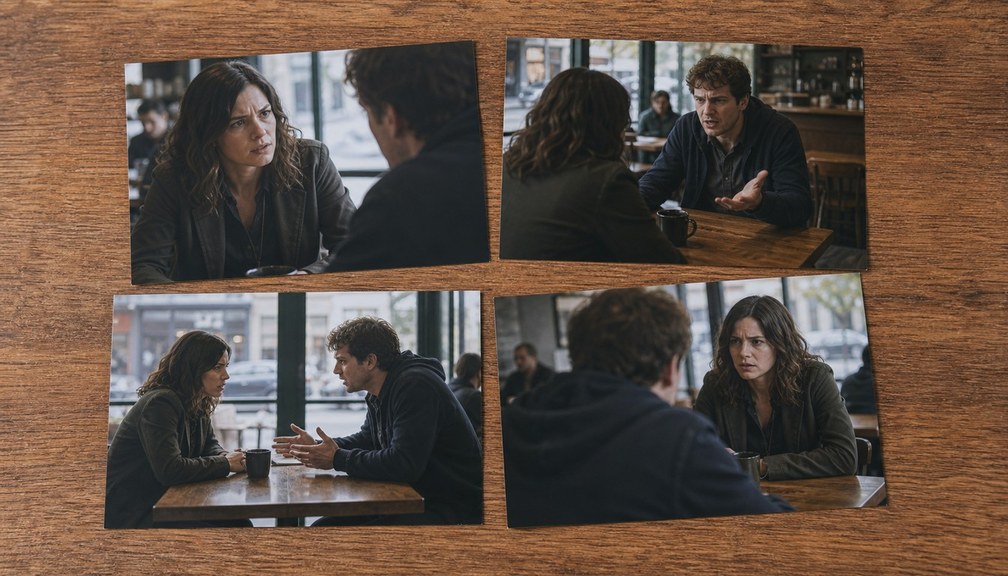
Choose the point of view that gives your story the strongest combination of voice, useful information limits, dramatic irony and narrative distance. Pronouns are only the visible surface of that decision. A café argument can retain the same people, actions and outcome yet become a markedly different reading experience when another voice tells it, another character filters it or the prose moves nearer to immediate thought. The best initial choice is therefore the version that serves this particular draft and remains workable beyond one impressive scene.
The essential decisions
Choose point of view for voice, information limits, dramatic irony and distance, not for pronouns alone.
Treat narrator, viewpoint character, knowledge boundary and narrative distance as separate controls.
First person, close third, omniscient third and second person each create opportunities and costs.
Add another viewpoint only when its access or contrast repays the cost of reorienting the reader.
Rewrite the same bounded scene under controlled conditions, then choose a provisional winner from observable effects.
What are you choosing when you choose a point of view?
You are choosing four related controls: who narrates, whose experience filters the scene, what the narration may reveal and how close the prose sits to immediate experience. Point of view establishes a story's perspective and voice as well as the knowledge available to its narration. Separating those elements is a practical editorial method, not a universal taxonomy, but it prevents a common mistake: assuming that changing I to she has settled every question about access, voice and distance.
Narrator: name the story-world position and voice doing the telling, not merely the pronoun appearing on the page.
Viewpoint character: identify whose perceptions, vocabulary, assumptions and blind spots shape the present scene.
Knowledge boundary: record what may be revealed now, what must be inferred and what is deliberately withheld.
Narrative distance: decide whether the prose favours bodily sensation and immediate thought or summary, reflection, context and commentary.
These controls can combine in many ways. A third-person narrator may remain close to one character, while a first-person narrator recounting old events may understand more than the earlier self who lived through them. Treat your answers as provisional design notes. Their value lies in making the draft's permissions and restrictions visible, so that later changes are deliberate rather than accidental.
Point of view is not the pronoun on the door; it is the system that decides who speaks, who perceives, what becomes known and how close the reader stands.
How do the main point-of-view modes change the page?
The main modes change whose language dominates, which minds are available and what kind of pressure the narration places on a scene. Grammatical person and available knowledge are separate decisions: third person need not be distant, and first person need not disclose everything its narrator knows. First person, close third, omniscient third and second person are all techniques that can be practised and revised. None is inherently more literary, intimate, objective or suitable for every story.
Compare each narration mode by access, useful pressure and the cost worth testing in your draft.
Narration mode
Reader access
Useful pressure
Cost to test
First person
The narrator's perceptions, memories, conclusions, language and blind spots.
Makes the teller's voice and reason for telling difficult to ignore.
Outside information must arrive indirectly; a retrospective narrator may know more than the earlier experiencing self.
Close third
One character's experience in third-person grammar, often coloured by that character's diction and judgements.
Combines a firm character filter with adjustable phrasing and distance.
Other minds remain externally legible unless the draft marks a transition; excessive filter phrases may push the prose away.
Omniscient third
A narrating intelligence may move beyond one character across minds, places, periods and context.
Allows breadth, comparison, commentary and dramatic irony.
Movement needs a discernible voice or organising logic; convenient, unmarked thought switching can appear accidental.
Second person
A narrator addresses or identifies a story-world “you”, whose relationship to the speaker must become legible.
Can create direct address, implication, accusation, self-division or estrangement.
Some readers may resist an assigned identity or action, so intimacy and immersion cannot be assumed.
How close should the prose sit to a character's experience?
Set narrative distance according to what the moment needs, because distance can move within the same grammatical person and viewpoint. Narrative or psychic distance is the felt separation between the reader and the events or character experience, not a physical measurement. Broader rendering can accommodate time, setting, summary, reflection and narratorial commentary. Closer rendering can emphasise character-specific diction, sensory detail, emotion and less processed thought, although no setting guarantees the same response from every reader.
Write a reserved version that establishes the room, the social situation and the action before entering detailed sensation.
Keep third-person grammar and the same viewpoint character, but rewrite with sharper bodily detail, immediate thought and character-coloured language.
Compare what each distance clarifies, delays or overemphasises; do not force the passage through a numbered sequence of levels.
Inspect the page rather than relying on a label. Phrases such as “she noticed” or “he felt” can be useful for clarity, but a crowded run of them may place an extra pane of glass between character and reader. Conversely, relentlessly close sensation may leave too little room for context or reflection. Distance is a zoom control, and a controlled rewrite reveals whether the scene needs a wider frame or a tighter one.
When does an additional viewpoint earn its place?
An additional viewpoint earns its place when it provides indispensable event access, interpretation, contrast or dramatic irony that the existing viewpoint cannot supply efficiently. This decision is independent of grammatical person: a novel may alternate first-person narrators or use several close-third filters. Each viewpoint should notice, interpret and phrase the world distinctly. Otherwise, every handover asks the reader to reorientate without delivering enough new value in return.
Keep the viewpoint if it reveals an essential event that would otherwise require an awkward report or contrivance.
Keep it if its interpretation transforms the meaning of shared events rather than merely repeating them.
Question it when the voices sound alike, the same information returns or the handover stalls momentum.
Use a clear scene or section transition when orientation needs help, but do not treat chapter breaks as the only permissible boundary.
Recasting a scene through a secondary character can reveal different perceptions, feelings, relationships and neglected material. That makes the exercise valuable even when the new viewpoint does not survive revision. It may show you what the original narrator has misunderstood, what another character conceals or which detail deserves greater weight. Discovery is not the same as structural entitlement: the alternate perspective can improve the original scene without joining the final narration.
How do you run a fair audition of several viewpoints?
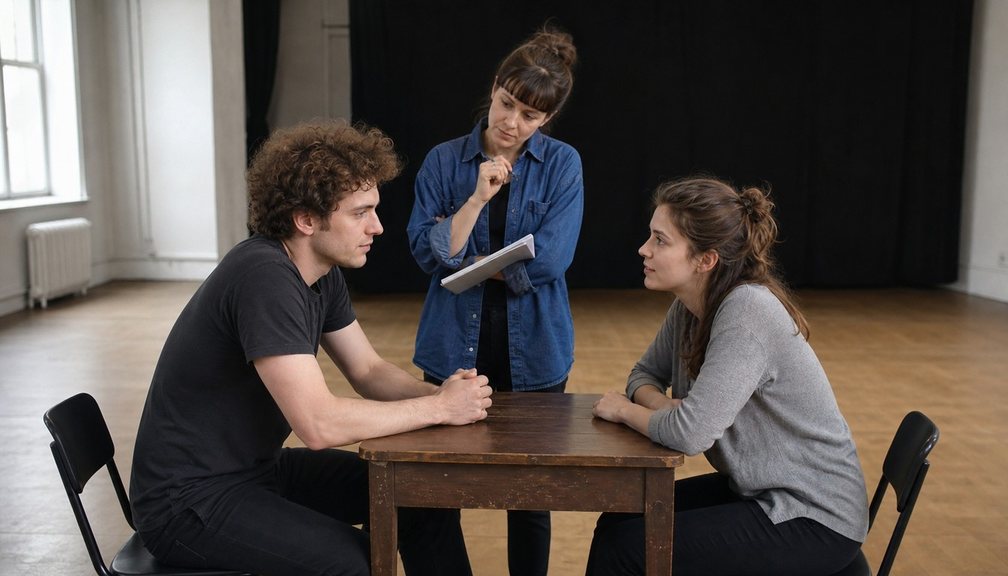
Run a fair audition by rewriting one bounded scene while keeping its underlying events and constraints steady. Choose two characters who want different things, include at least one concrete action and leave one relevant fact unspoken. Preserve the setting, conflict, desires, tense, endpoint and approximate length across every version. MIT OpenCourseWare uses a related exercise capped at 200 words; the roughly 250-word target here is an explicit adaptation that leaves room for additional distance and address tests.
Write first person from character A, deciding whether the narrator experiences the scene now or recounts it later.
Write close third from character A at a moderately observant distance.
Move that close-third version nearer to sensation, immediate thought and character-coloured diction without changing the events.
Write omniscient third with a clear narrating reason to move beyond character A.
Write second person after defining who says “you” to whom, even if the occasion remains implicit.
Write first person or close third from character B while preserving the same external incident.
Do not quietly improve the plot as you move through the sequence. Record discoveries in a separate note and apply them only after all six versions exist; otherwise, a later draft may seem stronger simply because it contains better events. Approximate equality matters more than an exact word count. The aim is to make changes in voice, access and distance visible without letting extra exposition masquerade as a point-of-view advantage.
How do you choose a provisional winner from the audition?
Choose the provisional winner by comparing observable gains, losses and recurring difficulties rather than awarding points for the mode you expected to prefer. Look first for language that only this narrator or viewpoint character could plausibly use. Then examine which necessary facts become available, which useful facts remain hidden and where dramatic irony appears or disappears. Controlled rewrites can expose those differences, but the following checks are a note-taking aid, not a validated scoring instrument.
Does the voice remain distinctive without becoming strained or repetitive?
Does the knowledge boundary reveal enough while preserving useful concealment?
Does the distance suit this moment and allow variation elsewhere?
Can offstage events, later revelations and scene transitions be handled cleanly?
Would the full story require the same awkward workaround again and again?
If another viewpoint is proposed, what indispensable access or contrast pays for each handover?
Revise the strongest version as a complete scene, then test it across enough additional pages to reveal repeated evasions, unclear transitions or a voice that cannot sustain its own pressure. Reopen the choice if the knowledge boundary repeatedly blocks essential events. An alternate viewpoint should enter because it adds indispensable access, not because it retells information already available. The decision remains provisional until the wider draft demonstrates that it works.
Point-of-view questions
How do I choose a point of view for a story?
Compare the narrator's voice, the viewpoint character's filter, the available knowledge, narrative distance and long-form practicality. Rewrite one controlled scene in your leading modes, then choose the version whose gains matter most and whose restrictions remain manageable.
Should I write fiction in first person or third person?
Use first person when the character narrator's language, reasons for telling and limits create useful pressure. Choose close third when you want one character's filter with third-person grammar and adjustable distance. Neither mode is inherently closer, easier or more reliable.
What is the difference between close third and omniscient third person?
Close third filters a scene through one viewpoint character, leaving other minds externally legible until a transition occurs. Omniscient third uses a narrating intelligence able to move beyond any single character. Those movements need a discernible voice or organising logic.
Should a novel have one viewpoint or multiple viewpoints?
Add viewpoints only when each provides indispensable event access, interpretation, contrast or dramatic irony. Make their voices or perceptual filters distinct enough to justify each handover. Multiple viewpoints can use first person, close third or another deliberately designed structure.
What is narrative distance in fiction?
Narrative distance is the felt separation between the reader and story events or character experience. Summary, context and commentary can widen it, while sensory detail, immediate thought and character-coloured diction can narrow it. Writers can adjust distance without changing grammatical person.
References & Sources
This article was researched using the following sources:
We write the reading guides we wanted and could not find. Our recommendations lean on reputable sources and bibliographic records, and we say plainly when something is a matter of taste. AI assists with research and drafting, and every guide is checked against its sources before it goes out.
Compare six mystery and crime-fiction routes by tone, intensity, investigative method and driving question, then choose a low-commitment place to start.
A practical guide to following comic panels, bridging gutters, reading lettering, sensing visual pace and understanding reveals across print and screens.
Find better read-alikes by isolating the plot, prose, setting, characters, themes and structure you loved, then writing a precise recommendation brief.