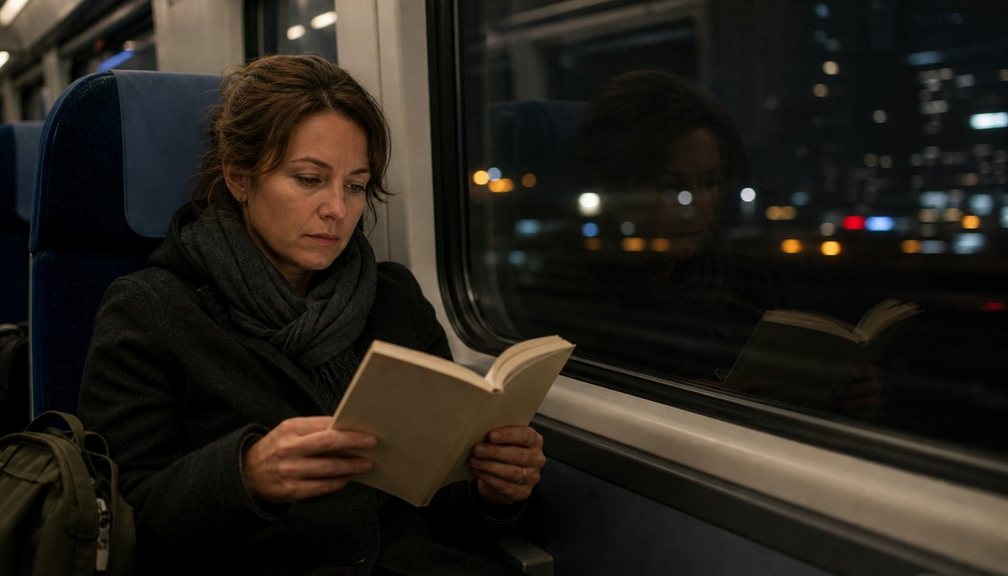
Choose the mystery experience you want: cozy mystery for a lighter social world; locked-room mystery for an apparently impossible puzzle; a police procedural for official investigative process; a legal mystery or thriller for lawyers, case strategy and contested accounts; hard-boiled detective fiction for street-level danger and corruption; or psychological suspense for intimate uncertainty and forward peril. These labels overlap across mystery, crime, suspense and thriller traditions, so no single shelf name can tell you everything about a book. Compare emotional tone, likely on-page intensity, who investigates and how, and whether the strongest pull is what happened or what might happen next. A disappointing first pick therefore says more about the match than about your capacity to enjoy the wider field.
The quickest way to choose
Choose by the reading experience you want, because mystery and crime-fiction labels overlap.
Cozy usually signals a lighter social world, while locked-room signals an apparently impossible puzzle.
Police procedurals foreground official investigation, while legal stories foreground lawyers and case strategy.
No label guarantees one book's intensity, so check title-specific information when you have firm boundaries.
How should you choose when mystery labels overlap?
Choose by comparing four signals: tone, likely on-page intensity, investigative method and the question driving your curiosity. Tone covers the emotional atmosphere, from companionable and reassuring to bleak or claustrophobic. Intensity concerns what the book may put directly on the page, not merely whether its subject is serious. Method asks whether clues emerge through social observation, logical reconstruction, official resources, legal argument, street-level inquiry or uncertain perception. The driving question separates a mainly backward-looking desire to learn what happened from the forward pull of wondering what may happen next.
Treat those signals as a reader's navigation tool, not an official taxonomy. Libraries, publishers, booksellers and readers may classify the same novel differently, and one book can combine several traditions. Even within a familiar label, pace, setting, action and character emphasis can shift considerably. Darkness and graphic detail are also separate qualities: a sombre book need not be explicit, while a seemingly gentle setting cannot promise that every subject will feel comfortable. Cozy offers the clearest general signal of restrained explicitness among these six, but readers with non-negotiable boundaries should still check the individual title.
The best mystery label is not a box for the book; it is a compass for the reading experience you want.
Would you rather have social comfort or an impossible puzzle?
Choose cozy mystery for a generally lighter, socially intimate reading experience; choose locked-room mystery when the apparent impossibility of the crime is the main attraction. A cozy commonly places an amateur sleuth within a community they understand. Conversation, observation, local knowledge and ordinary expertise can become investigative tools, making relationships as important as physical clues. The appeal often lies in watching familiar social surfaces crack while the story retains a comparatively restrained approach to explicit violence, sex and language.
That restraint is a convention, not a promise that nothing upsetting occurs. A cozy may begin with a serious crime, expose betrayal or grief, and vary from witty to earnest without leaving the broad tradition. If you want warmth but dislike a particular kind of content, check the publisher's description and any reliable title-specific notes. The useful signal is a lighter social world and usually limited explicitness, not immunity from danger, loss or morally difficult behaviour.
A locked-room mystery makes a different bargain: something appears physically or logically impossible, and the pleasure comes from discovering how it could have happened within the story's established possibilities. A remote house, stopped train or small suspect group is not enough on its own. Those features create a closed circle; the locked-room element requires an impossibility that demands explanation. Some puzzles also follow fair-play principles, inviting the reader to reason towards a surprising but coherent answer, although not every locked-room novel observes the same rules. Puzzle design says little about gentleness, so assess tone and content separately.
Do you want official investigation or a legal contest?
Choose a police procedural when the organised work of police investigators should drive the story; choose a legal mystery or thriller when lawyers, competing accounts and case strategy should carry more of the pressure. A procedural may follow one officer or a cooperating squad through interviews, evidence work, specialist assistance and institutional decision-making. Readers who enjoy seeing information gathered, shared and tested often find the method itself as involving as the eventual solution.
The word procedural does not guarantee a dry pace, documentary realism or any particular level of violence. One novel may concentrate on patient casework and teamwork, another on action or the investigators' private lives. Fiction can compress time, simplify systems and depart from actual practice, so it should not be treated as an account of how Australian police organisations operate. Use the label to anticipate an official investigative engine, then check the specific book for pace, character balance and intensity.
Legal mysteries and thrillers shift the dramatic arena towards accusation, defence strategy, disputed evidence and questions of justice. Their action can move through offices, homes, investigations and negotiations as well as courtrooms. Some focus on reconstructing a past event through argument; others place a lawyer, witness or client in escalating personal jeopardy. That range changes the balance between mystery and thriller, and the label provides no dependable content rating. Nor is fictional legal procedure practical guidance: its value here is the contest over whose account can withstand challenge.
Do you want street-level grit or inward uncertainty?
Choose hard-boiled detective fiction when you want pressure from a dangerous, corrupt social world; choose psychological suspense when uncertainty about memory, motive, perception and trust should create the strongest tension. The conventional hard-boiled investigator is streetwise and disenchanted, moving through danger while seeking some limited measure of justice. The tone is often dark, and the method depends heavily on confrontation, persistence, local knowledge and the investigator's ability to endure compromised institutions.
Hard-boiled stories usually direct their energy outwards through movement, threat and social corruption rather than sheltering the detective inside a purely intellectual exercise. They can still contain an intricate whodunit, however, and writers frequently complicate the familiar lone-investigator pattern. Hard-boiled should not simply be replaced with noir: a book may carry both labels, but noir is another signal with its own history and implications. For this choice, concentrate on the hard-boiled promise of grit, external pressure and a resilient investigator.
Psychological suspense turns the investigation inwards without necessarily abandoning an external mystery. Secrecy, fear and uncertain interpretation can matter as much as formal clue gathering, while doubt about another person's motives—or one's understanding of events—keeps the ground unstable. These stories often strengthen the forward question of what may happen next, although they can also solve a crime from the past. They do not require an unreliable first-person narrator, a particular profession or a withheld resolution. Both darker routes vary in explicitness, so neither label is a substitute for checking an individual title.
Six overlapping entry points compared by their typical reading signals
Subgenre and typical tone
Likely on-page intensity
Investigator or method
Driving reader question
Cozy mystery — generally lighter and socially intimate
Usually restrained, but never a title-specific guarantee
Amateur sleuth using observation, conversation and community knowledge
What happened beneath this familiar social surface?
Locked-room mystery — often cerebral, with tone otherwise variable
Not predictable from the puzzle design
Logical reconstruction of an apparently impossible crime
How could this possibly have happened?
Police procedural — often methodical and work-focused
Varies from restrained casework to stronger action or violence
Police investigators using teamwork and institutional resources
How will the official investigation build and test the case?
Legal mystery or thriller — strategic and adversarial
Variable, especially when personal jeopardy becomes prominent
Lawyers testing evidence and competing accounts through case strategy
Which account will withstand legal challenge?
Hard-boiled detective fiction — gritty and often disenchanted
Often tense or violent, but the label sets no exact level
Streetwise investigator confronting danger and corruption
What justice is possible in a compromised world?
Psychological suspense — intimate, uncertain and often tense
Emotional pressure may be high; graphic detail still varies
Attention to motive, memory, secrecy, perception and trust
Whom can I trust, and what might happen next?
How can you test a subgenre without a big commitment?
Test a subgenre by choosing one desired experience, sampling a standalone novel or series opener, and recording your reaction to the same four signals. This is a practical reader-advisory exercise, not a formula that predicts enjoyment. Begin with the feature that matters most today: social comfort, an impossible puzzle, official method, legal contest, street-level grit or psychological uncertainty. Borrowing from a local library can make the experiment especially low-commitment, while a series opener keeps the option of continuing without requiring it.
Name the experience you want before choosing a label.
Read enough to judge the book's tone, intensity, method and driving question.
Note which factor worked and which one caused friction.
Change one factor for your next sample instead of abandoning the whole category.
If you enjoyed the investigative method but disliked the tone, try another title carrying the same broad label. Books grouped together can differ markedly in pace, setting, action and character focus, so one poor match does not characterise the category. You can also combine signals when asking a librarian or knowledgeable bookseller: request a logic-led puzzle with restrained explicitness, for instance, or an official investigation with a stronger character focus. Describing the desired experience is usually more informative than insisting on one perfect category name.
Keep content boundaries separate from preference notes. Tone and subgenre can narrow the search, but neither reliably confirms what appears on the page. When a particular form of violence or other material is a firm limit, consult the individual publisher description and trustworthy title-specific content information. Then choose the route that sounds inviting now, rather than the one you think a mystery reader is supposed to prefer. The useful result is not a permanent label for your taste; it is a clearer next choice.
Mystery subgenres: common questions
What are the main types of mystery novels?
Six useful entry points are cozy mystery, locked-room mystery, police procedural, legal mystery or thriller, hard-boiled detective fiction and psychological suspense. They are an accessible starting map, not a complete taxonomy, and several extend into neighbouring crime, suspense and thriller traditions. One novel may combine more than one.
What is the difference between a cozy mystery and a police procedural?
A cozy mystery usually has a lighter, socially intimate setting and an amateur sleuth who draws on observation, conversation and community knowledge. A police procedural foregrounds police investigators, official resources, teamwork and institutional process. Neither label guarantees the content or intensity of an individual book.
Is a locked-room mystery the same as a closed-circle mystery?
No. A closed circle limits the likely suspects, often through isolation or circumstance. A locked-room mystery centres an apparently impossible crime and makes explaining how it occurred a primary puzzle, so a small suspect group alone is not enough.
What does hard-boiled mystery mean?
Hard-boiled detective fiction conventionally follows a streetwise, disenchanted investigator confronting danger and corruption while pursuing a limited measure of justice. Its pressure is typically external and its tone gritty, although it can still contain a carefully constructed whodunit. Hard-boiled and noir should not be treated as interchangeable labels.
What is the difference between a locked-room mystery and psychological suspense?
A locked-room mystery asks how an apparently impossible crime could have occurred and usually foregrounds logical reconstruction. Psychological suspense places more weight on motive, memory, secrecy, perception, trust and the forward fear of what may happen next. A book can combine both approaches, and neither label predicts an exact content level.
References & Sources
This article was researched using the following sources:
We write the reading guides we wanted and could not find. Our recommendations lean on reputable sources and bibliographic records, and we say plainly when something is a matter of taste. AI assists with research and drafting, and every guide is checked against its sources before it goes out.