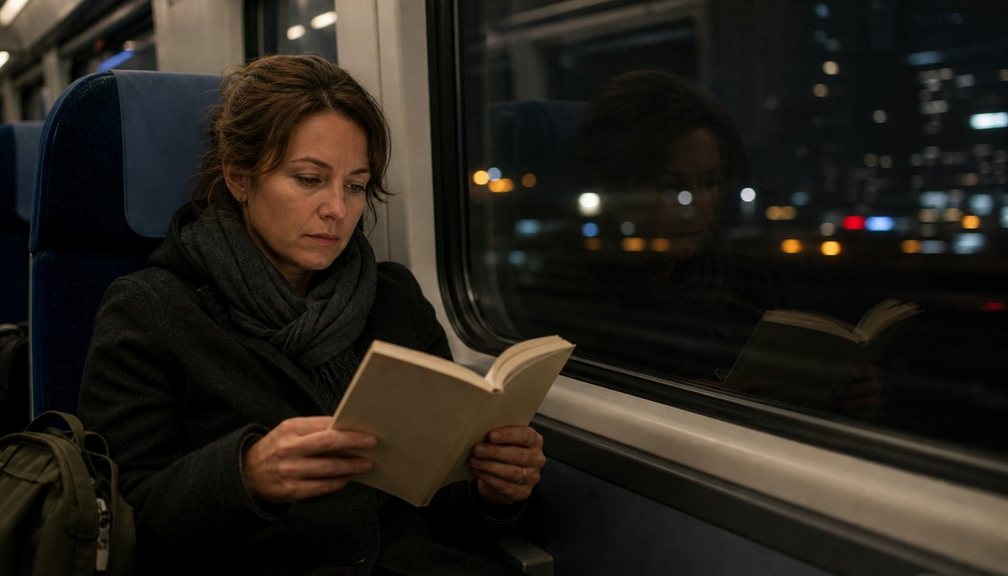
Compare six mystery and crime-fiction entry points by tone, intensity, investigative method, and driving question to find the experience that fits you.
Choose the mystery subgenre that delivers the experience you want. Try a cozy mystery for a lighter, socially connected world; a locked-room mystery for an apparently impossible puzzle; a police procedural for official investigative work; a legal mystery or thriller for lawyers, disputed accounts, and case strategy; hard-boiled detective fiction for street-level danger and corruption; or psychological suspense for intimate uncertainty and forward peril. These are overlapping entry points, not sealed categories. A book may borrow from several traditions, and its label cannot tell you everything about tone or explicitness. If one mystery disappointed you, changing the investigative method or emotional pressure may lead to a much better match.
The quickest way to choose
Choose by tone, likely intensity, investigative method, and the question pulling you through the story.
Cozy signals a lighter social world, while locked-room signals an apparently impossible puzzle rather than gentle content.
Police procedurals foreground official investigation, while legal stories foreground lawyers, accusation, and case strategy.
Hard-boiled fiction turns pressure outward, while psychological suspense directs uncertainty inward and often toward future peril.
For firm content boundaries, check information about the individual title instead of trusting its label alone.
How should you choose when mystery labels overlap?
Choose with four signals: emotional tone, likely on-page intensity, the investigator and method, and the story's driving question. That framework is a navigation tool, not an official taxonomy. Mystery and neighboring crime-fiction categories have inconsistent, overlapping definitions, so libraries, publishers, booksellers, and readers may classify the same novel differently. Asking what the book feels like and how it creates momentum is usually more useful than trying to force it into a single perfect category.
Tone describes the emotional atmosphere: comforting, playful, cerebral, grim, tense, or disenchanted, for example. Intensity concerns what the story places on the page and how forcefully it presents danger or distress. The two do not move in lockstep. A somber book is not automatically graphic, and a seemingly gentle label does not guarantee that every event will suit every reader. Cozy offers the clearest signal of restrained explicitness among these six routes, but it is still only a signal.
Method and driving question reveal where the reading pleasure lives. You might want an amateur drawing on community knowledge, a detective reconstructing an impossible event, a police team using official resources, or lawyers testing competing accounts. Then consider whether your strongest curiosity points backward—What happened, and how?—or forward—Who is in danger, and what will happen next? Mystery often favors the first pull, while suspense strengthens the second, though one novel can do both.
The best mystery label is not a box for the book; it is a compass for the reading experience you want.
Do you want social comfort or an apparently impossible puzzle?
Choose a cozy mystery for a generally lighter, socially intimate reading experience; choose a locked-room mystery when explaining an apparently impossible crime is the central attraction. Both can reward close attention, but their promises differ. Cozy is primarily a cluster of tone, setting, content, and sleuth signals. Locked-room describes the design of the puzzle. A novel can therefore combine the two, or offer a formidable locked-room problem within a story that is anything but comforting.
A cozy typically places an amateur sleuth in a connected community and restrains explicit violence, sex, and language. Investigation often advances through conversations, observation, local relationships, and knowledge gained outside professional law enforcement. That pattern makes social texture part of the solution: noticing who knows whom, which routine has changed, or why an ordinary detail matters. These are conventions rather than requirements, and a lighter presentation does not mean that nothing upsetting occurs.
A locked-room mystery asks how an event that appears impossible could have occurred within the possibilities established by the story. The room need not be the only important feature; the essential pleasure is dismantling the impossibility through observation and reasoning. A remote house, stranded group, or limited suspect pool creates a closed circle, but that alone does not create a locked-room puzzle. When a story also follows fair-play principles, it invites the reader to reason toward a surprising yet coherent solution, although not every locked-room tale follows identical rules.
Do you want official investigation or a legal contest over the case?
Choose a police procedural when official investigators and organized casework should drive the story; choose a legal mystery or thriller when lawyers, accusation, strategy, and disputed truth should supply the main pressure. Both routes place institutions near the center, but they offer different arenas. The procedural follows how investigators build a case. Legal fiction focuses on how a case is challenged, defended, argued, or reshaped under the pressures surrounding the justice system.
Police procedurals foreground police work and may follow one officer or a cooperating squad. Interviews, evidence work, specialist resources, teamwork, and institutional constraints can become much of the narrative engine. The appeal often lies in accumulating information through an organized process rather than waiting for one dazzling intuitive leap. Even so, books under this label vary in their balance of method, action, solution, and investigators' personal lives, and the label does not establish a dependable level of on-page explicitness.
Legal mysteries and thrillers commonly turn on lawyers, competing accounts, defense choices, justice, accusation, and personal jeopardy. Their action may move through offices, investigations, negotiations, homes, and public spaces as well as courtrooms. Some emphasize the mystery of what happened; others increase suspense by making the outcome or a person's safety feel uncertain. The label signals a dramatic focus, not a promise that fictional police or legal procedure accurately reflects practice in a particular jurisdiction, and fiction should not be treated as practical guidance.
Do you want street-level grit or inward uncertainty?
Choose hard-boiled detective fiction for external pressure—danger, corruption, confrontation, and endurance—or psychological suspense for inward pressure involving motive, memory, perception, secrecy, fear, and uncertain trust. Both routes often feel darker than a cozy, but darkness is not an intensity rating. Either may contain material a reader prefers to avoid, and neither label predicts graphic content reliably. The sharper distinction is where the story concentrates its pressure and which uncertainty keeps you reading.
Hard-boiled detective fiction conventionally centers a streetwise, disenchanted investigator moving through a threatening social world while pursuing some limited measure of justice. Its energy tends to come from external resistance: compromised institutions, dangerous encounters, difficult movement through a city or community, and the investigator's ability to endure. That emphasis separates it from a sheltered intellectual puzzle, but it does not rule out a carefully constructed whodunit. Writers also vary and complicate these familiar conventions.
Hard-boiled and noir should not be treated as interchangeable labels. A particular book may carry both, but noir adds a separate signal that deserves its own explanation rather than functioning as an automatic synonym. For this choice, stay focused on the hard-boiled investigator's stance, surroundings, and external pressure. That keeps the comparison useful without turning a neighboring tradition into a seventh category or pretending every gritty detective story works in precisely the same way.
Psychological suspense brings the investigation inward. What someone remembers, conceals, fears, wants, or perceives may matter as much as formal evidence gathering, while an external mystery or threat keeps building. This route often intensifies the forward-looking question of what may happen next, though it can still solve a past crime. It does not require an unreliable first-person narrator, a particular profession, or one specific device; the essential signal is that uncertainty about minds and motives carries substantial narrative weight.
Six overlapping entry points, compared by typical reader-facing signals
Subgenre and typical tone
Likely on-page intensity
Investigator or method
Driving reader question
Cozy mystery — generally lighter and socially intimate
Usually restrained, but not guaranteed gentle
Amateur sleuth using observation, relationships, and ordinary expertise
What happened within this community?
Locked-room mystery — cerebral; tone varies
Not predictable from the puzzle label
Reasoning through an apparently impossible crime
How could this have happened?
Police procedural — methodical and work-focused
Varies by title
Police investigators using teamwork and institutional resources
How will the official investigation build the case?
Legal mystery or thriller — strategic and contested
Varies from argument-driven to perilous
Lawyers testing evidence and competing accounts
Which account will survive the legal contest?
Hard-boiled detective fiction — gritty and disenchanted
Often feels dangerous; explicitness still varies
Streetwise investigator confronting corruption and pressure
What justice is possible in this world?
Psychological suspense — intimate and uncertain
Often tense; graphic content varies
Attention to motive, memory, perception, secrecy, and trust
What is true, and what may happen next?
How can you test a subgenre without making a big commitment?
Test a subgenre by choosing one desired experience, sampling a standalone novel or series opener, and noting your response to the same four signals. This is practical reader-advisory guidance, not a scientific test. The goal is to learn what worked without committing to a long series or deciding that one book represents an entire category. Begin with the strongest attraction: social comfort, impossible puzzle, official method, legal contest, street-level grit, or psychological uncertainty.
Pick one route and select a standalone or a first series volume so prior knowledge is unnecessary.
After reading, record the tone, on-page intensity, investigative method, and whether the backward or forward question held your attention.
Keep the factors that worked and change the ones that did not; a satisfying method may appear in books with very different tones.
Describe your preferred combination to a librarian or bookseller instead of requesting only a broad label.
If the method pleased you but the tone did not, try another title within the same broad category. Mystery fiction varies substantially in pace, action, setting, character emphasis, and emotional atmosphere, so one unsuccessful sample cannot define the shelf. You can also combine signals: ask for a logic-led puzzle with restrained explicitness, an official investigation with stronger character focus, or psychological uncertainty that still resolves a past crime. For nonnegotiable boundaries around violence or other material, consult title-specific descriptions or content notes.
The useful outcome is not a perfectly labeled book; it is a clearer account of your taste. You may discover that you enjoy amateur investigation but want less social comfort, or that you like legal strategy only when the driving question remains a mystery rather than future peril. Follow those appeal factors into your next selection. Labels work best when they shorten the search, while your own response supplies the finer distinctions that no category name can reliably contain.
Frequently asked questions about mystery subgenres
What are the main types of mystery novels?
Cozy mystery, locked-room mystery, police procedural, legal mystery or thriller, hard-boiled detective fiction, and psychological suspense are six useful entry points. They are not a complete taxonomy, and some extend into neighboring crime, suspense, and thriller traditions. A single novel may combine more than one.
What is the difference between a cozy mystery and a police procedural?
A cozy typically pairs a lighter, socially intimate setting with an amateur sleuth and restrained explicitness. A police procedural foregrounds police investigators, teamwork, official roles, and institutional resources. Individual books in either category can vary in tone, pace, and intensity.
Is a locked-room mystery the same as a closed-circle mystery?
No. A closed-circle story limits the likely suspects, often through isolation or a contained social group. A locked-room mystery centers an apparently impossible crime whose method demands explanation, so a limited suspect list alone is not enough.
What does hard-boiled mystery mean?
Hard-boiled detective fiction conventionally features a streetwise, disenchanted investigator facing danger, corruption, and external pressure while seeking limited justice. It may still contain a whodunit, and writers frequently vary its conventions. Hard-boiled should not automatically be substituted for noir.
What is the difference between a locked-room mystery and psychological suspense?
A locked-room mystery concentrates on explaining an apparently impossible crime through observation and reasoning. Psychological suspense directs more attention toward motive, memory, perception, secrecy, fear, and uncertain trust, often strengthening the question of what may happen next. The approaches can overlap in one book.
References & Sources
This article was researched using the following sources:
We write the reading guides we wanted and could not find. Our recommendations lean on reputable sources and bibliographic records, and we say plainly when something is a matter of taste. AI assists with research and drafting, and every guide is checked against its sources before it goes out.
Learn to separate what you loved about a book, rank the qualities that matter now, and turn them into a precise brief for choosing your next great read.
Choose publication order, story chronology, author guidance, or a selective entry with a practical method that protects reveals and local dependencies.
Choose a fiction point of view by comparing voice, knowledge, distance, and practical costs through carefully controlled rewrites of one dramatic scene.