Print, Ebook, or Audiobook? How to Choose by Situation
Choose print, ebook, audiobook, or a flexible mix by weighing the moment, the book, accessibility, privacy, cost, and exact editions available right now.
Choose the edition that fits the next reading moment, the particular book, your access setup, your privacy preferences, and the options available now. That may mean print for one novel, an ebook for a trip, and audio for a memoir whose narrator works for you. Format is a practical choice, not a reader identity. The five-part sequence used here is an editorial framework rather than a research-tested protocol: shortlist by setting, inspect the book, test access, review privacy and control, and then compare exact editions.
The short version
Choose for the next reading moment, not for a permanent reader identity.
Use print when a stable physical page, easy visual scanning, or device-free reading matters most.
Choose an ebook for carrying capacity, retrieval, or adjustable presentation only after verifying the exact edition and reading system.
Choose an audiobook when the setting leaves enough listening attention and the production and navigation suit the book.
Before committing, compare access features, privacy and offline terms, current cost, library holdings, and wait times.
What does your next reading moment require?
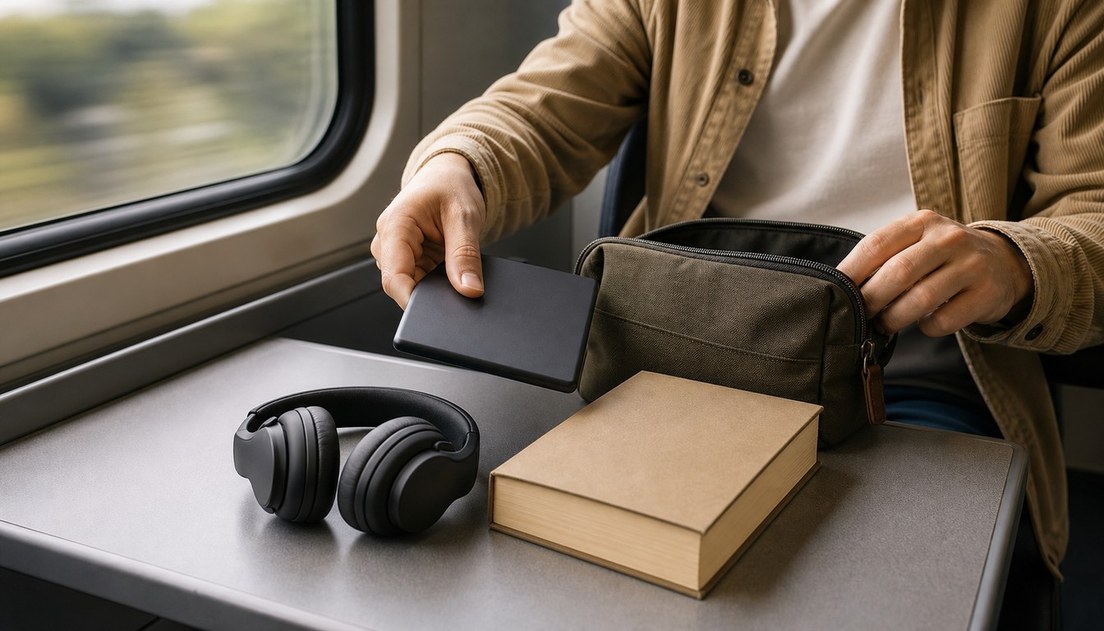
The setting should establish your initial shortlist. Picture the next actual session: where you will be, how much attention you can give, whether your hands and eyes are available, and what you are willing to carry or charge. An ebook or downloaded audiobook may be an efficient travel candidate when several titles must fit in one bag. Print already on hand may be the cleaner choice when you want no device, little data use, or straightforward local control.
Then test the practical details that the format label hides. For digital reading, check battery life, storage, offline downloads, account access, and whether headphones are appropriate for the setting. For print, check weight, type size, lighting, page handling, and storage. Treat audio as an option only when listening fits the moment; if the book competes with attention needed for safety, caregiving, navigation, or equipment, pause it and choose another time.
Name the next setting and the amount of attention it permits.
Check whether your eyes, hands, hearing, or audio access are available for reading.
List what must be carried, charged, downloaded, connected, or stored.
Remove any option that conflicts with safety or an essential access need.
Carry the remaining formats forward as starting points, not verdicts.
Situation-based format starting points
Situation
Likely starting point—not a verdict
What to verify before choosing
Light-packing travel or carrying several books
Ebook or downloaded audiobook
Battery, offline download, storage, headphones, access duration, and whether the book's visuals work in that edition.
Hands occupied with spare listening attention
Audiobook
Safety, background noise, narrator sample, chapter navigation, and whether the activity leaves enough attention for this book.
Quoting, searching, comparing passages, or building notes
Searchable ebook or print
Full-text search, note durability or export, page references, index quality, and movement between distant passages.
Illustrated, typographically unusual, or page-dependent work
Print or a verified fixed-layout digital edition
Sample pages, image quality, color, facing-page relationships, zoom, text alternatives, and accompanying material.
Adjustable text or hands-free access is essential
Accessible ebook, accessible talking book, or audio
Accessibility metadata, reflow, text controls, screen-reader support, navigation, descriptions, playback controls, and assistive-technology compatibility.
Device-free, low-data, or locally controlled reading
Print already on hand
Weight, print size, lighting, page handling, storage, and any purchase or circulation record.
Lowest-cost path to one specific title
Whichever exact edition is affordable or borrowable now
Library holdings and waits, used and new print, current digital offers, access term, required hardware, and continued usability.
How does this book need to be read and revisited?
The book's layout and your intended interactions should determine which format survives the shortlist. Before buying or borrowing, inspect sample pages for maps, illustrations, equations, footnotes, unusual typography, or facing-page relationships. EPUB can be reflowable, allowing presentation to adapt, or fixed-layout, preserving a composed page. The word “ebook” therefore does not tell you how this edition will behave on your screen, especially when page design carries part of the meaning.
For study, quotation, or close comparison, test the exact edition instead of relying on a generic promise of convenience. Libby's documented reader, for example, can search for a word or phrase and jump to matches, but that proves one implementation rather than a universal ebook feature. Check full-text search, index quality, stable references, speed of backtracking, annotation persistence, and export before building a workflow around a digital copy.
Annotations also work differently across formats. Print markings remain visible in the copy and can be scanned quickly, provided you are willing to mark and carry it. Some ebook systems support bookmarks, highlights, notes, and export; Libby documents those functions in its reader. Its audiobook player instead uses time-position bookmarks, captured passage highlights, and attached notes. Sample the return path: finding an idea again matters more than whether a feature appears on a checklist.
Choose a stable page when composition and visual comparison carry meaning.
Choose adaptable text only after confirming that the edition actually reflows.
Test search and references with a real passage you expect to revisit.
Create a trial note, close the book, reopen it, and check whether the note persists or exports.
For audio, test chapter movement and returning to a marked moment.
Which edition works with your body, senses, and access setup?
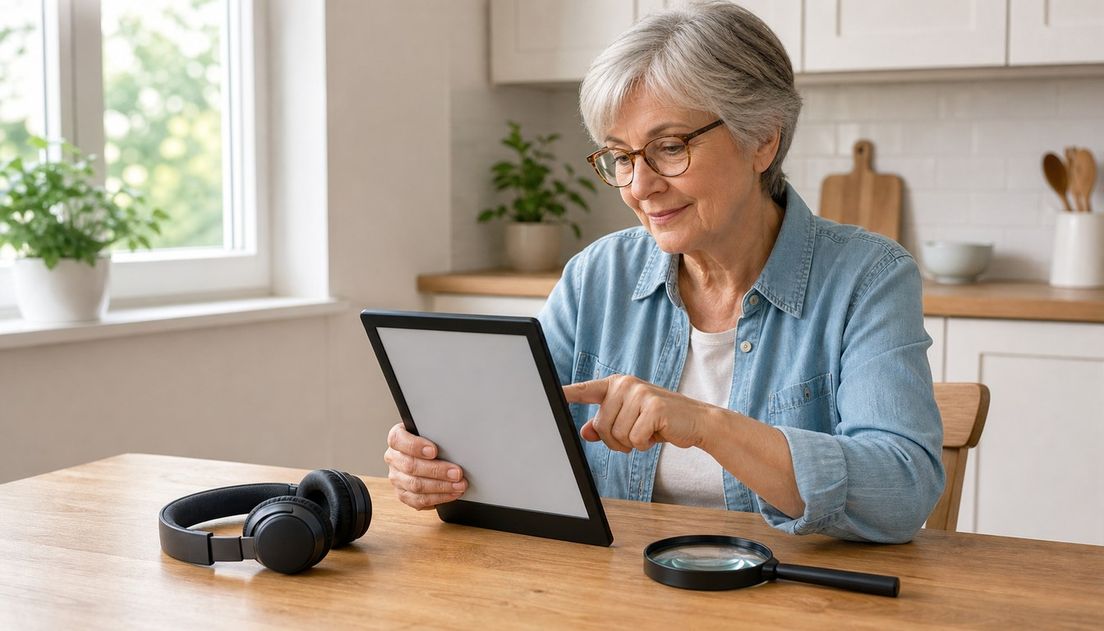
Accessibility belongs to the exact publication, reading system, device, and personal setup—not to the format label. Check them together using a sample whenever possible. Useful tests can include reflow, text size and spacing, contrast, zoom, screen-reader behavior, keyboard or switch navigation, image descriptions, playback controls, and compatibility with your assistive technology. W3C guidance also identifies search, adjustable presentation, zoom, navigation, and operating-system accessibility integration as reading-system capabilities worth evaluating.
Accessibility metadata can identify an EPUB publication's required access modes and included features, giving you a stronger starting point than the file extension alone. Metadata still may be incomplete, difficult to find, or insufficient for your setup, so test the actual reading path. Do not assume that any EPUB is accessible, or that an ordinary commercial audiobook supplies the navigation, descriptions, controls, and service model of a specialized accessible talking book.
For audio, sample the specific production. Narrator, cast, pronunciation, pacing, recording quality, chapter navigation, and accompanying files can change whether that edition works for you. Some EPUB publications use media overlays to synchronize prerecorded narration with text and highlighting, but both the publication and reading system must support them. In the United States, eligible readers whose qualifying disability prevents use of regular print can apply for free braille and talking books through the National Library Service; its eligibility and geography are program-specific.
What privacy and control tradeoffs are you accepting?
No format is wholly private, but the exposure points differ. Reading an owned print copy offline does not require sending progress or marginal notes to a digital reading service. Buying or borrowing that copy can still create a transaction or circulation record, while its cover, location, and storage can reveal information in shared spaces. For digital reading, separate the content from the account, app, synchronization, and service rules that make access possible.
Review the specific provider's account requirements, offline behavior, retained activity, user controls, deletion routes, and what happens when a loan or subscription ends. Libby's privacy statement offers one concrete example: it says the service uses IP addresses and may receive text entered in fields such as notes, tag descriptions, and library card names. Those disclosures belong to Libby and should not be generalized to every ebook or audiobook service.
What information is collected, and which fields receive text you enter?
How long is information retained, and who can access or receive it?
Which conveniences depend on an account, synchronization, or an internet connection?
Can you reset local data, delete information, export notes, or read offline?
What access remains after a loan, purchase arrangement, or subscription ends?
The American Library Association's vendor privacy guidelines provide a useful U.S. professional checklist: clear disclosure of collection, retention, access, sharing, minimization, user choice, security, and deletion. They are guidance, not a universal law or an audit of any provider. Use them to ask better questions, then read the current policy for the service you are actually considering. Privacy decisions should follow the exact account and access arrangement, not “digital” as a single category.
Which option is actually available and affordable now?
Compare the exact editions you can obtain now. Check the library's print, ebook, and audiobook holdings by title, format, and language, then compare current new or used print options and digital access terms. Include hardware you already own, connectivity, loan duration, waiting time, and any constraints on replacement, resale, lending, or continued access. For a price decision, current availability matters more than a broad claim that one format is always cheapest.
A library may carry one format but not another because libraries build their own digital collections. Libby also notes that a desired edition may be unavailable for library purchase or may never have been published digitally. A missing ebook or audiobook in one catalog does not settle the question: ask whether print, another library channel, or an accessible collection offers the title, but do not assume that a digital edition exists somewhere.
Digital borrowing may involve a wait. Libby explains that libraries commonly acquire individual digital copies loaned to one reader at a time, with copy counts shaped partly by demand and budget. That means the quickest route can vary from title to title: a print copy may be on the shelf while an ebook has a hold list, or the reverse. Place a hold if it suits your timeline, but compare the editions available today before paying for speed.
Use a sample or loan to test the remaining candidate whenever possible. Read a page that contains the book's hardest layout, search for a phrase, create a note, jump between chapters, or listen long enough to judge the production. If an access need is decisive and the sample does not resolve compatibility, ask a librarian, accessible-reading service, or assistive-technology specialist about the exact publication and reading system. Switching formats between books—or between sessions—is a successful adjustment, not inconsistency.
The best format is not a reader identity; it is the edition that fits this book in this moment.
Frequently asked questions
Print vs. ebook vs. audiobook: which is best?
There is no universal winner. Start with your next reading moment, then check the particular book, your access setup, privacy preferences, and the exact editions available now.
Is an ebook or audiobook better for travel?
Either can be a strong starting point when packing light matters. Compare battery, storage, offline downloads, headphones, available listening attention, access duration, and whether the book depends on visuals.
Which book format is best for studying, quoting, or taking notes?
Print and a verified searchable ebook are useful starting points. Test full-text search, indexes, stable references, note persistence, export, and movement between passages in the exact edition.
Are ebooks more accessible than print books?
An ebook label does not guarantee accessibility. Inspect available metadata and test the publication, reading system, device, and assistive setup together for reflow, display controls, navigation, descriptions, and compatibility.
Is an audiobook cheaper than an ebook or physical book?
Do not rely on a general price ranking. Compare current editions, access duration, existing hardware, library holdings and holds, used print, subscription conditions, and whether access continues after the arrangement ends.
References & Sources
This article was researched using the following sources:
We write the reading guides we wanted and could not find. Our recommendations lean on reputable sources and bibliographic records, and we say plainly when something is a matter of taste. AI assists with research and drafting, and every guide is checked against its sources before it goes out.
Build a flexible reading routine with a reliable cue, realistic normal session, smaller busy-week fallback, and a simple way to learn from missed starts.
Organize your home library around the clues readers remember, with clear rules for author, genre, subject, series, shared shelves, and oversized books.
Learn to separate what you loved about a book, rank the qualities that matter now, and turn them into a precise brief for choosing your next great read.